
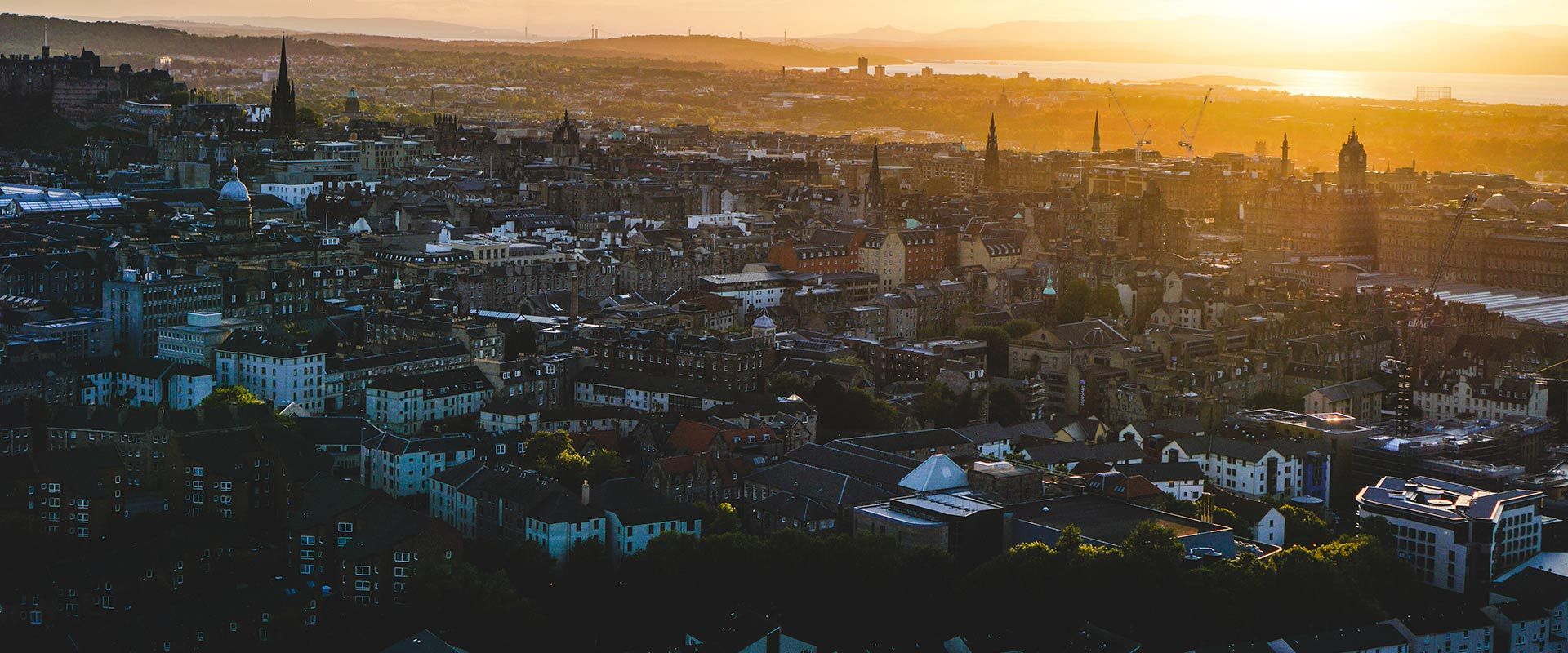
Hundreds of people from across Scotland have gathered in Edinburgh to talk climate with political leaders as part of one of the biggest ever mass lobbies on the topic to be held in Scotland.
Residents from northern, southern, eastern, western and central parts of the country have come to the capital to meet MSPs face-to-face and discuss actions that should be taken to tackle climate change and build a fairer, safer future.
The meetings come ahead of the publication of Scotland’s new Climate Change Plan, which will set out how the country will meet its target to reach zero emissions by 2045, and just months before Scots head to the polls for the next Scottish Parliament election.
The lobby was organised by Scotland’s climate coalition, Stop Climate Chaos Scotland (SCCS), which has more than 70 member groups from across society, all united in the mission to tackle climate change.
How to make homes warmer and cheaper to heat, making public transport more accessible and affordable, and protecting Scotland’s land and seas, were among the issues discussed at the lobby, with MSPs from all parties expected to attend.
Emilia Hanna, mass lobby coordinator for SCCS, said: “The huge turnout at the lobby shows just how deeply Scots care about the effects of climate change on people, communities and the planet, and want to see action to protect the things they love.
“MSPs must heed these calls as they review the government’s new Climate Change Plan, which needs to contain robust measures to cut greenhouse gas emissions but also help boost health and well-being, provide good jobs, greener transport and nature-friendly food, and make sure homes are warmer and our bills cheaper. With the political will to drive fast and fair action, all this can be done.”
Mike Robinson, chair of Stop Climate Chaos Scotland, said: “If you care about poverty, you should care about climate change. If you care about your health, you should care about climate change. And if you care about things like food, affordable energy, safe homes, flooding, people being displaced from their homes, creating a more certain future and being more self-dependent in this current wave of
geopolitical instability, then you should also care about climate change. “That’s why hundreds of people have turned up today for this lobby, and that’s why we will keep pushing for action on this issue. We will not settle for anything else. It’s too important.”
First Minister John Swinney was at Holyrood to meet with residents from his Perthshire North constituency.
First Minister John Swinney, MSP for Perthshire North, said: “I warmly welcome the work of Stop Climate Chaos Scotland and everyone involved in campaigning for climate action. Raising awareness of this issue has never been so important – particularly at a time when we are witnessing a concerning rise in anti-climate rhetoric from opposition parties, despite the majority of people in Scotland recognising that climate change is an immediate and urgent problem.
“The Scottish Government’s commitment to reaching net zero by 2045 is unwavering, and the new carbon budget framework will put us on course to achieve this. Scotland is now more than halfway to net zero and continues to be ahead of the UK as a whole in delivering long-term emissions reductions.
“Through practical measures like growing our offshore wind sector, creating over 15,000 hectares of new woodland, and removing peak fares on ScotRail services, Scotland is well positioned to continue leading on climate action that is fair, ambitious and capable of rising to the emergency before us.
“We know the importance of reducing emissions but we also know the importance of adapting to the changes in our climate we are already experiencing. Last year we published our adaptation plan, with over 200 commitments to make our communities, public services and economy more climate resilient.”
Dr Rachel Hardie, a retired consultant in public health medicine, has come to Edinburgh from near Duns, in the Scottish Borders, for an audience with politicians. She is involved with a local group which is campaigning to convert the former Berwickshire railway line into a shared access route, accessible to all. Their vision, which began during the Covid pandemic, is to create a 40-mile route connecting
Tweedbank (the end of the Borders railway) to Reston (where a new station was being built) and on to the coast at Eyemouth. That vision has now turned into a project called the Borders Greenway, and earlier this year a Preliminary Design Report was published for one section, following a
successful application by our community group to the UK government’s Shared
Prosperity Fund. If implemented, they believe that this shared access route will help
local people travel actively to school, work and shops and connect communities, it
will draw people into the area by train for active, sustainable tourism, benefit the local
economy and get people out of their cars.
Dr Rachel Hardie said: “I’m travelling to Edinburgh to join the Mass Climate Lobby because I feel very strongly that we should all be doing whatever we can to address the climate crisis. My particular passion is active travel – it has so many benefits for people, place and planet.
“I want to share our story with MSPs face-to-face. We recently had the chance to meet with Rachael Hamilton and I believe it made a real difference to talk it through with her.
“We want active travel infrastructure projects like ours to be a realistic prospect, but that requires dedicated, secure and substantial funding. And that requires robust active travel policy from the Scottish Government.
“I really hope that the MSPs meeting us on the 18th will listen to all the stories they hear, and subsequently call for improved and sustained investment in local active travel infrastructure projects like ours, as well as supporting evidence-based behaviour change projects.”
Rochana Sheward, director of SCCS member Friends of the Earth Scotland, said: “People are showing up to demand that politicians put transformative climate ideas back at the top of their agenda. If politicians listen to these calls to act with fairness and urgency, the transition away from fossil fuels can help boost public transport, ensure we live in homes we can afford to heat and create good green jobs right across the country.”
Jamie Livingstone, head of Oxfam Scotland, an SCCS member, said: “The creeping impacts of climate change are impossible to ignore; scorching summers, record-breaking temperatures and extreme storms are becoming our new normal.
“People from across Scotland have come to the Scottish Parliament with a simple message: it’s time for politicians to end the inertia and replace climate bickering with fair climate action. “This action should be paid for by the biggest polluters and the better off, such as people who choose to travel by unnecessary pollution-spewing private jets. This vital transition must be fast, fair and fully funded, and it’s time Scotland’s politicians’ action matched the scale of the crisis we can all see.”
Alan Munro, director of Young Sea Changes Scotland, a member of SCCS, said: “Scotland’s
seas are vital in the fight against climate change. They hold as much carbon as all of our land-based ecosystems, and healthy seabed habitats capture far more than our forests every year. But our marine environment is in poor condition, and we are failing to protect crucial blue carbon habitats like seagrass meadows and deep-sea mud from damaging activities.
“We need leadership that recognises blue carbon as a powerful climate solution. The next Scottish Government must map and safeguard Scotland’s blue carbon stores and put marine protection at the heart of our climate plans.”
Ben Wilson, director of public engagement for the Scottish Catholic International Aid Fund (SCIAF), an SCCS member, said: “While the effects of climate change are beginning to show here in Scotland, it’s the countries of the Global South that are bearing the brunt of its impacts. The harsh reality is that the world’s poorest communities are suffering first and worst.
“We must take every step possible here at home to meet our Paris Agreement commitments as quickly as possible, while also doing all we can to support vulnerable nations in adapting to and recovering from the impacts of climate change.
“Today, people across the country are calling on political leaders to ensure that global justice and climate action remain at the heart of the Scottish elections next
year.”