

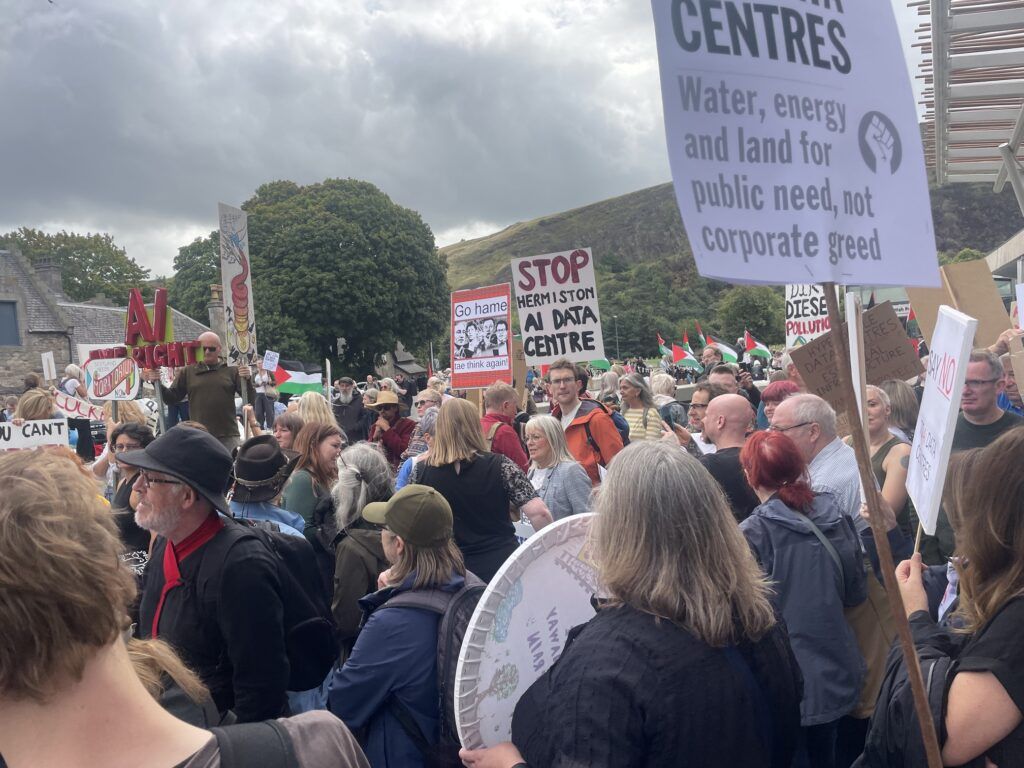
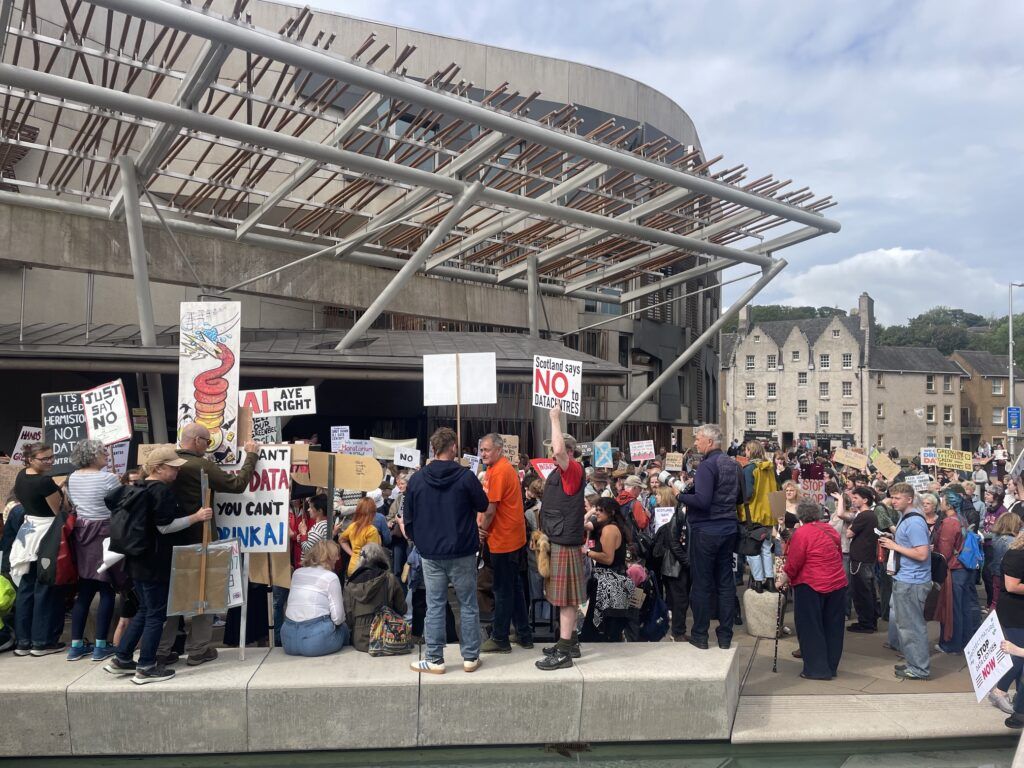
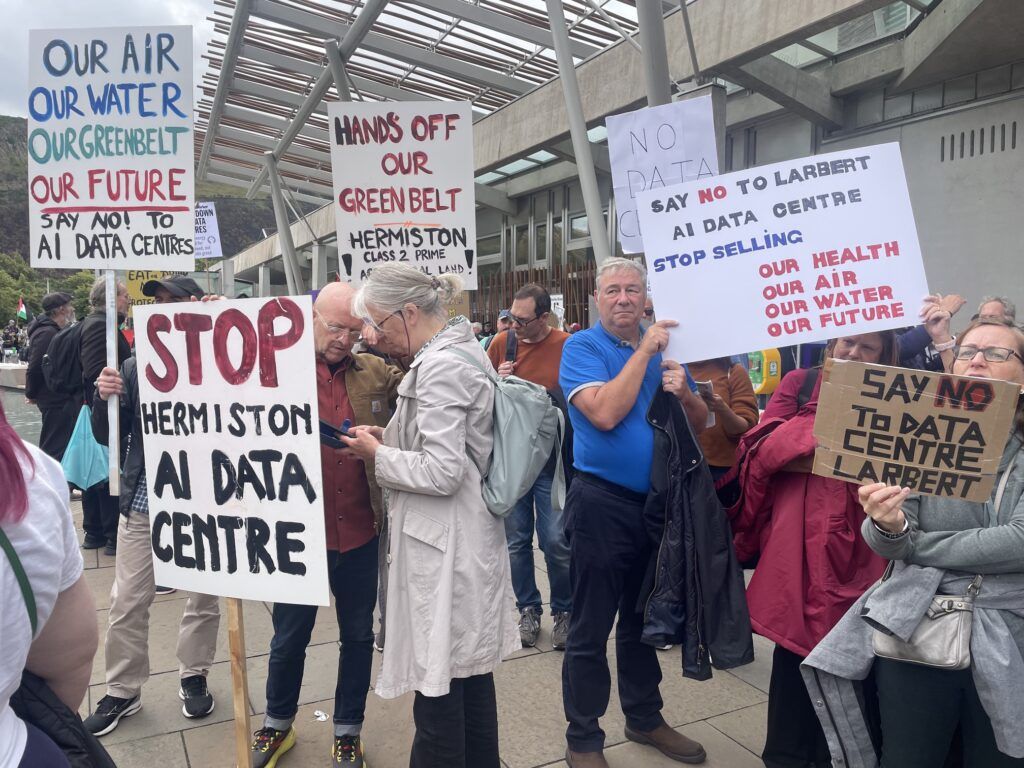
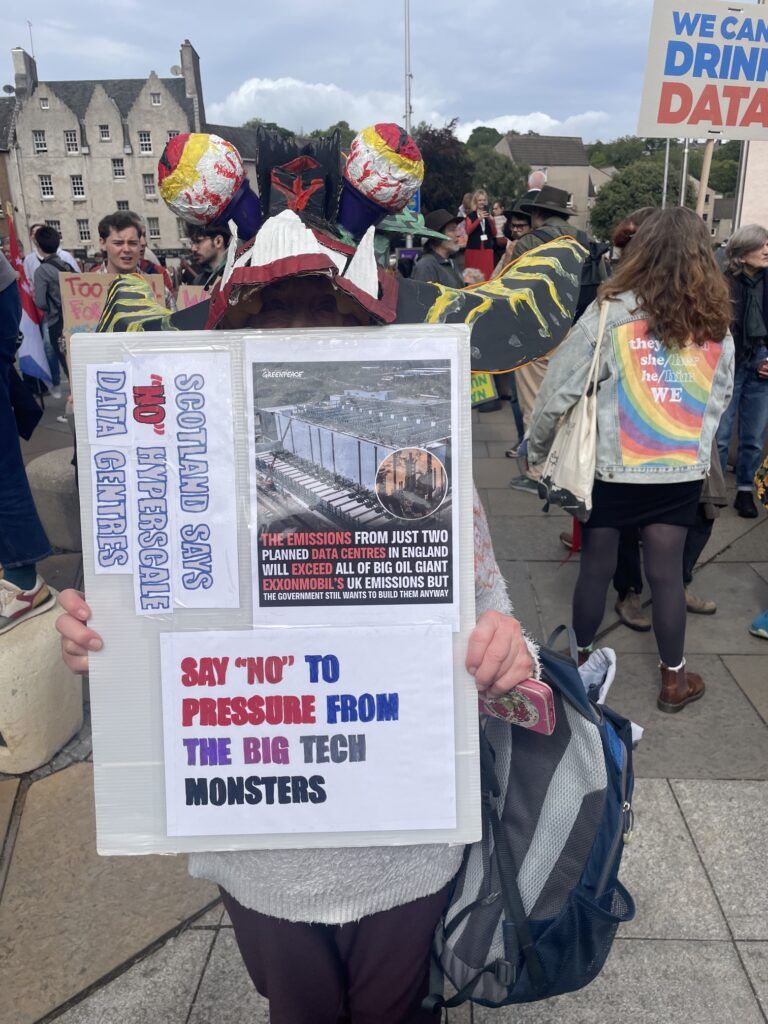
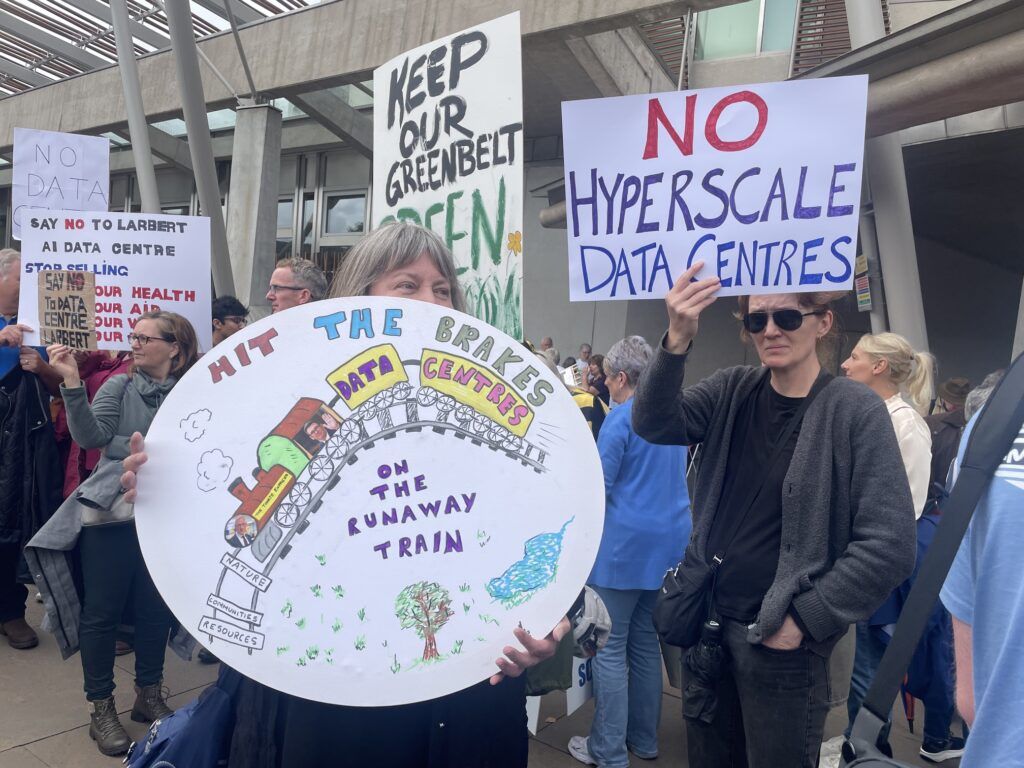
Everything always seems to come along in threes, and 16 September was one of those days for the campaign against hyperscale data centres. As well as the Green-led debate and vote in the Scottish Parliament on a moratorium on hyperscale data centres, it was the deadline for objections to the Greenock data centre proposal, and also the pre-determination hearing for the 300MW Larbert data centre.
So much can change in just one day. Last Wednesday dawned with four data centres under active consideration by councils, with a collective energy demand equivalent to that generated by Torness, a decision on Larbert imminent, no prospect of guidance and strategic direction forthcoming anytime soon, and no need for hyperscale data centres to do Environmental Impact Assessments (EIAs).
By the end of the day we had EIAs assured for all data centres over 50MW – for current applications AND for those proposed in future – and a pause of up to 12 months on hyperscale data centre decisions until planning guidance and other work is produced, as laid out in the Labour and Scottish Government text which passed.
This is an incredible and tangible result for those affected by the proposals for hyperscale data centres. Relief was the predominant emotion being expressed to me by community campaigners. Diane Davidson is a campaigner at Chapelhall, where the AI Growth Zone is planned, and where a “planning in principle” application is being considered for a 120MW data centre right next to homes in the village, without even having been required to do an EIA. She told me: “We are relieved to have some breathing space.”
The Chapelhall application is one of multiple sites proposed in the area, not just data centres but also the supporting energy infrastructure. The community is struggling to grasp the scale of the developments, and have been overwhelmed, so Davidson sees the pause as not just for developers to produce an EIA and the Scottish Government to produce guidance. She said: “Residents need time to understand what an AI data centre proposal could mean for their area before they can meaningfully be part of the conversation.”
In Greenock, where a hyperscale data centre has been proposed to replace plans for 450 homes, retail units and a park-and-ride on a reopened train station, the parliamentary debate coincided with the closing date for objections. There were more than 1,700 comments on the planning portal, when the news came that EIAs would be required for all data centres over 50MW. This will put back the development proposal for a long time, perhaps indefinitely. The Greenock application was one of the poorest-quality we have seen, with a completely inadequate EIA screening carried out, and nowhere near enough information provided to even start to assess an application properly. Now the developers will need to do a huge amount more work, including actually designing the data centre, before they can provide the information required – which means they will have to go to the drawing board, for the first time.
As voting was taking place at Holyrood, the huge sports hall of Larbert High School was filling with people for what Hazel Mackie of the Larbert campaign described as “a grueling four-hour pre-determination hearing” on the hyperscale data centre planned in their community. The 300MW data centre would be right next to homes and a care home, and just 500m from a major hospital. The planning committee sat along one long table at the back, while the developers and their various consultants, planning lawyers and other advisors were at a table at the left-hand side. A capacity crowd on raked seating listened as, one by one, community members and others opposing the plans stepped up to a mic on a small table at the other side of the room.
I only arrived for the second half as I had to travel straight from the parliament, but I heard powerful speeches from those who would be affected – including one of the care home residents, Janet Mayo, living with advanced MS. She asked the committee “to give full and meaningful weight to the health, wellbeing, dignity and human rights of Glenbervie Care Home residents” and asked that “if this development is considered further, it must be demonstrated that it will not cause unacceptable harm to those of us who are least able to avoid its effects”. Her speech left many in the room in tears.
At the end, the developer acknowledged the vote in the parliament for a pause and said that they would be awaiting Scottish Government guidance.
As well as the implications this vote has already had in all these cases above, the impacts go far further. The Scottish Parliament has, rightly, acknowledged that these behemoth developments need proper scrutiny, and the guidance and processes required to do this are not yet in place. As Matt Bernico of the Greenock campaign said in his reaction to the vote: “We now expect the Scottish Government to finally deliver robust, binding guidance that puts environmental protection and public transparency ahead of big tech interests.” Communities are celebrating and taking a breath, but will now be holding MSPs and ministers to the commitments they’ve made. ◼
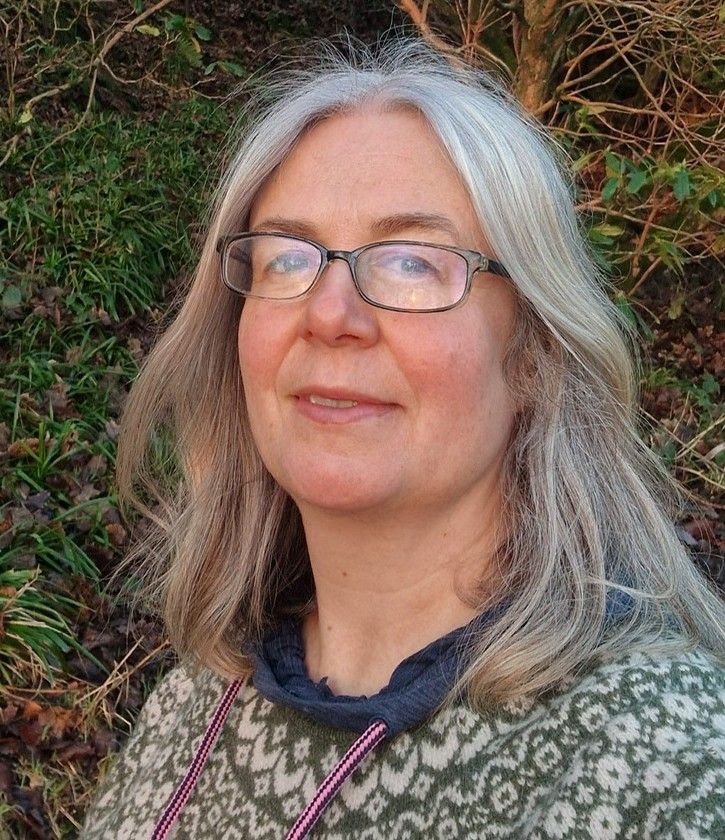
Dr Kat Jones is director of Action to Protect Rural Scotland (APRS), a member of Stop Climate Chaos Scotland and major driving force in the campaign against unbridled rollout of hyperscale data centres in Scotland
A version of this article first appeared in The National