

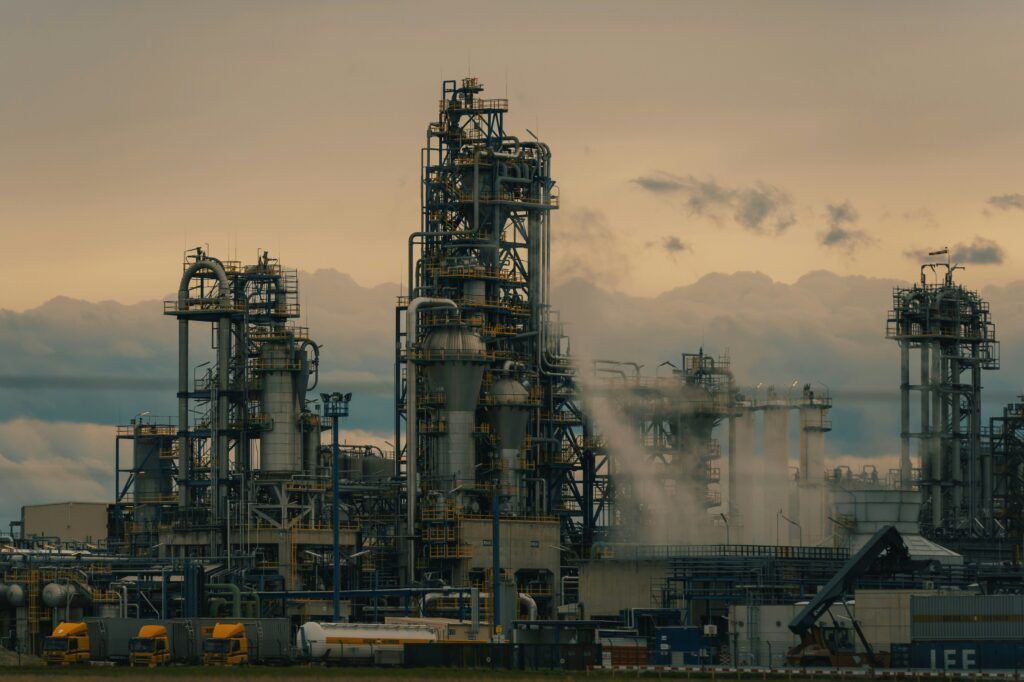
Photo by Michael Pointner on Unsplash
Hi-tech kit could capture megatonnes of climate-warming emissions in the future, so what’s not to like?
By Ilona Amos, Press and Communications Lead for SCCS
There is a lot of high-level talk about NETs and how their deployment could gobble up vast quantities of greenhouse gas emissions, helping countries reach climate targets. However, Stop Climate Chaos Scotland has major reservations about relying on complicated future engineering to solve problems that can be tackled now.
There are many ways of capturing carbon to prevent it escaping into the atmosphere and driving climate-warming. These include nature-based solutions such as planting trees, restoring peatlands and creating wetlands. And then there are NETs, which are generally considered to be manmade, technological systems.
So what are NETs?
NET stands for negative emissions technology, an overarching term for systems designed to actively grab carbon dioxide and lock it away in long-term reservoirs, leading to a situation where a greater overall quantity is removed than produced.
There are several categories of NET, each with its own methodology.
There are high-tech methods which backers say will remove and lock away a greater quantity of carbon than is being released and so deal with the build-up from historical activities.
There are namely:
- Carbon capture and storage (CCS): Where technological processes are used to grab emissions at source, allowing them to be taken away and disposed of, usually in geological formations such as depleted oil and gas wells.
- Carbon capture, usage and storage (CCUS): The same as CCS but the seized gas is used in industrial applications.
- Direct air capture (DAC): Takes carbon dioxide directly from ambient air using chemical processes, which can then be stored underground or used in industrial applications.
- Bioenergy with carbon capture and storage (BECCS): Where emissions from biomass power generation – which uses combustion, fermentation, pyrolysis and other methods to convert plant material into energy – are collected before release and then stored.
Some people also include techniques which can effectively slow the rate of carbon dioxide accumulation but do not actively cut the existing atmospheric concentration.
Examples are:
- Ocean-based NETs: These include techniques such as ocean fertilisation, where nutrients are added to boost phytoplankton growth, and alkalinity enhancement, to increase the ocean’s capacity to absorb carbon dioxide.
- Biochar: Produced by heating organic matter in low-oxygen environments, this charcoal-type product – which evidence shows was used in agriculture by ancient civilisations in the Amazon – can be added to soil to secure carbon for centuries.
- Regenerative agriculture: Enhancing the capacity of soil to store carbon through practices such as reduced tillage and cover-cropping.
- Geoengineering: Deliberate large-scale manipulation of climate, using techniques such as cloud-seeding and sun-dimming, to alter the amount of solar radiation hitting the earth.
Direction of travel
Government advisers at the Climate Change Committee (CCC) have said carbon capture tech has a role to play in efforts to reach net zero targets.
The Scottish and UK governments have reflected this in their climate plans, and have committed funding to support development of CCS projects.
However, other experts and scientists remain sceptical, preferring to focus on reducing emissions in the first place.
What is the current status of NETs here?
There are a number of CCS and CCUS projects currently under development in the UK. The only major scheme in Scotland is Acorn, which aims to decarbonise high-polluting industrial sites by trapping emissions and using redundant gas pipelines to transport the gases to offshore storage sites in depleted North Sea oil wells.
Acorn, which has been pledged £200 million in UK government susubsidy and a further a further £80 million from the Scottish Government, had largely focused on the country’s two biggest climate polluters – Grangemouth refinery and Mossmorran petrochemical plant, both now closed or closing – as the main sources of carbon dioxide, as well as a proposed new gas-burning power station at Peterhead. Others could also be utilised.
Industrial processes in Scotland generate around 10 million tonnes of emissions each year, a massive part of the country’s total carbon footprint. The Acorn project claims it will capture at least half of these emissions, possibly more, over a group of sites.
Sounds like a magic wand, so what’s the problem?
These kits seem to promise a pathway for removal of the most stubborn emissions and the hangover from past releases, helping countries meet national and global climate targets. However, there are a number of major concerns.
1. The technology is still very much in development, with very few schemes in operation worldwide. Delivery dates in the UK have continually been pushed back – the most recent estimates suggest CCS deployment may not come until the late 2030s, just a few short years before Scotland’s 2045 net zero target date.
2. The cost of this kind of tech is astronomical. Scotland’s Acorn project alone is due to receive more than £280 million in taxpayer support – on top of investment from private businesses – and it’s still at the embryonic stage. The fact that its biggest backer recently pulled out also points to a lack of confidence.
3. Mechanisms such as CCS are vaunted as ‘necessary’ for removing ‘stubborn’ emissions from the likes of concrete manufacturing. But innovation in these fields is moving apace and is likely to deliver quicker and more effective carbon reductions.
4. Recycling carbon dioxide for use in industrial processes defeats the point of removing it in the first place. Since most of the carbon capture tech that is already up and running is being used in the oil and gas industry – to offset emissions from drilling operations, but also using captured gas to extract more product – it can encourage continued use of fossil fuels, the key driver of climate change.
5. Trials have not decisively proved that carbon dioxide can be safely and permanently locked away in geological formations. Depleted oil and gas wells have already been drilled to release the petroleum and so are likely to have been fractured, raising significant concerns over leakage – with potentially disastrous effects on the climate and the environment. These sites will have to be monitored and guarded forever, passing a huge burden and cost to future generations.
In a nutshell, reliance on NETs to solve emissions problems is a major gamble. Delivery will be too slow, too expensive and too risky, and could provide a get-out-of-jail-free card for the dirtiest industries to continue burning fossil fuels.
⬛ For more information, see the report Fossil Fuel Carbon Capture & Storage, published by SCCS member Friends of the Earth Scotland in 2021