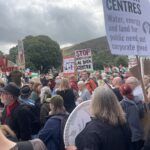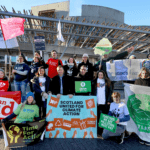
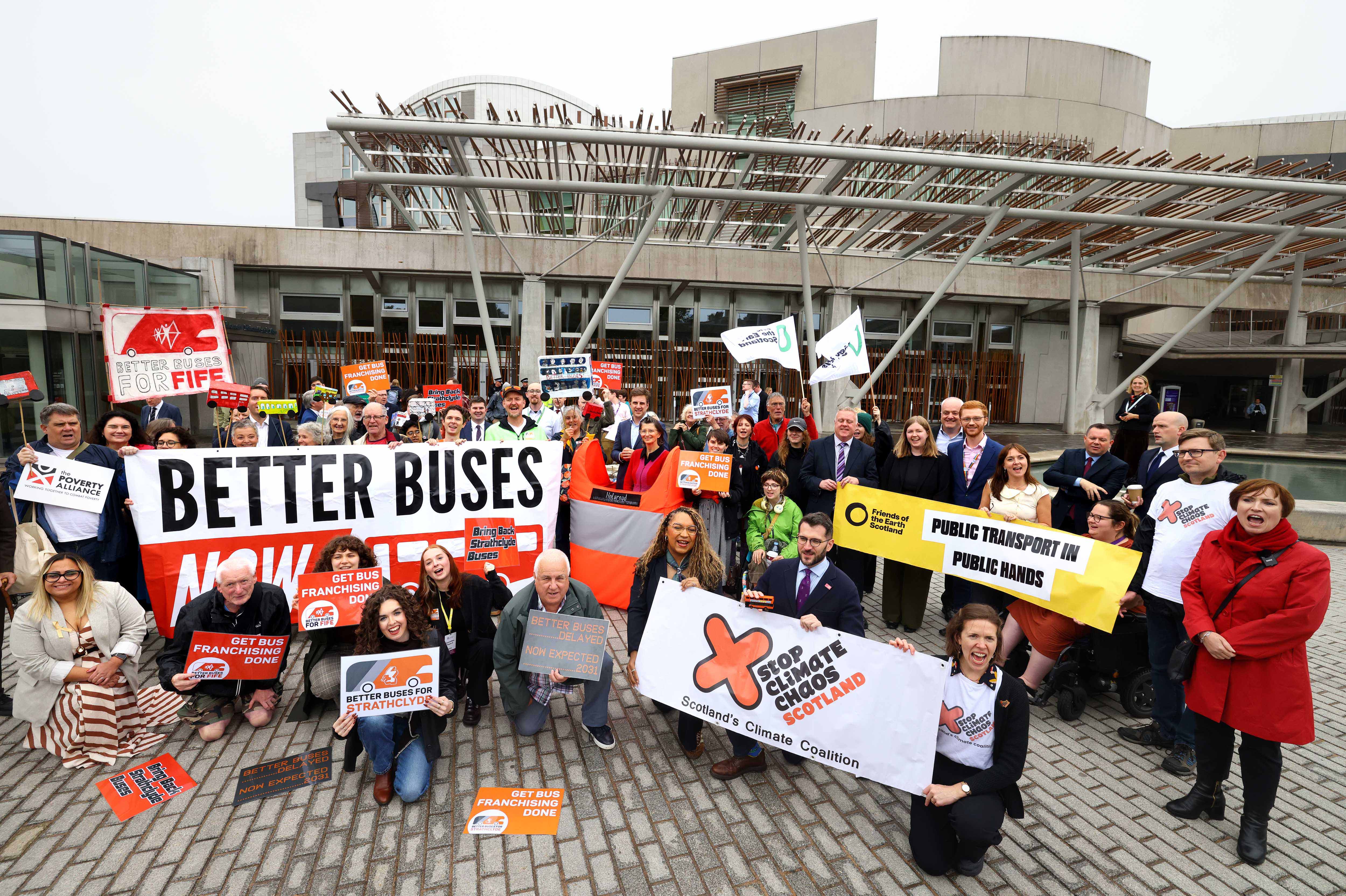
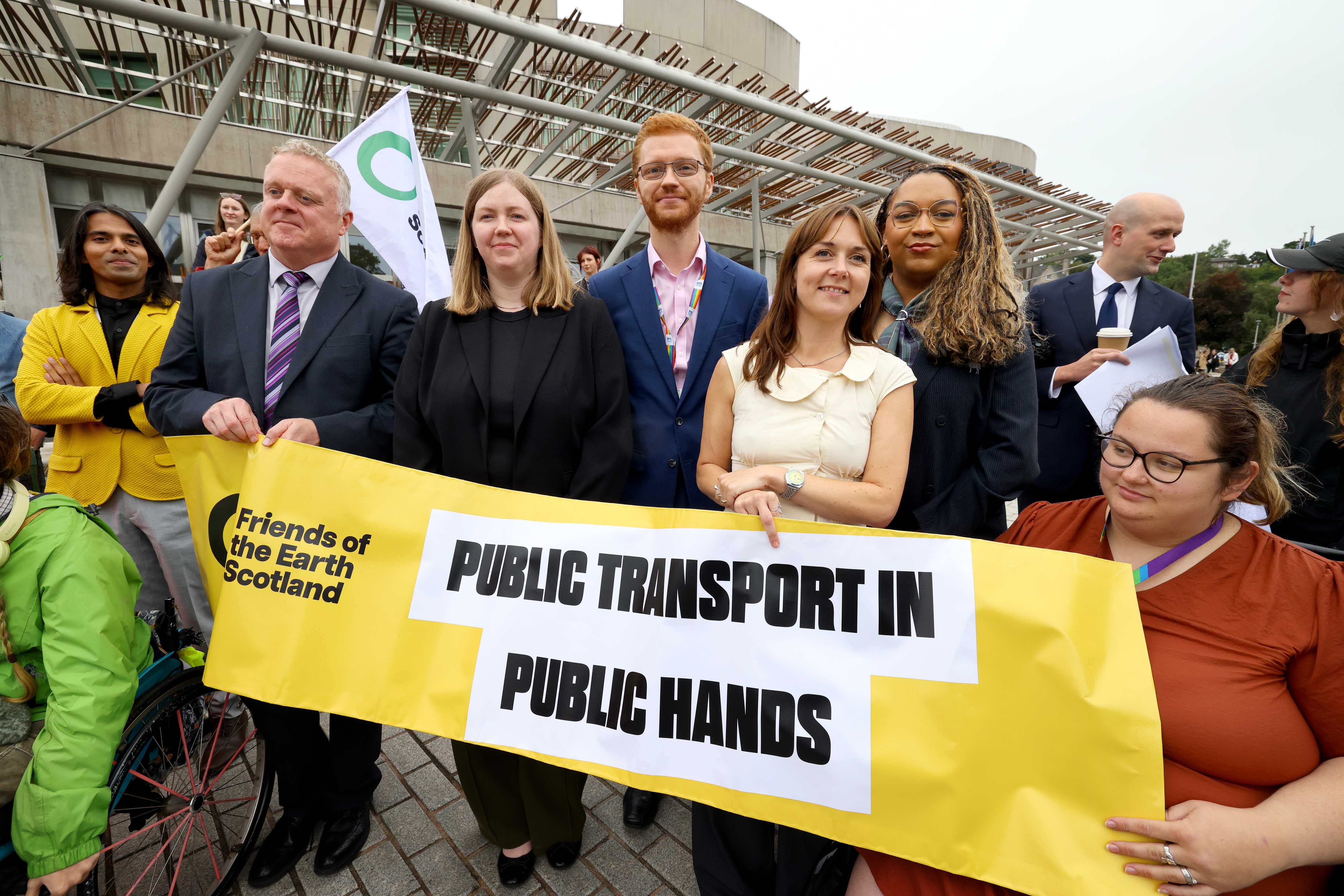
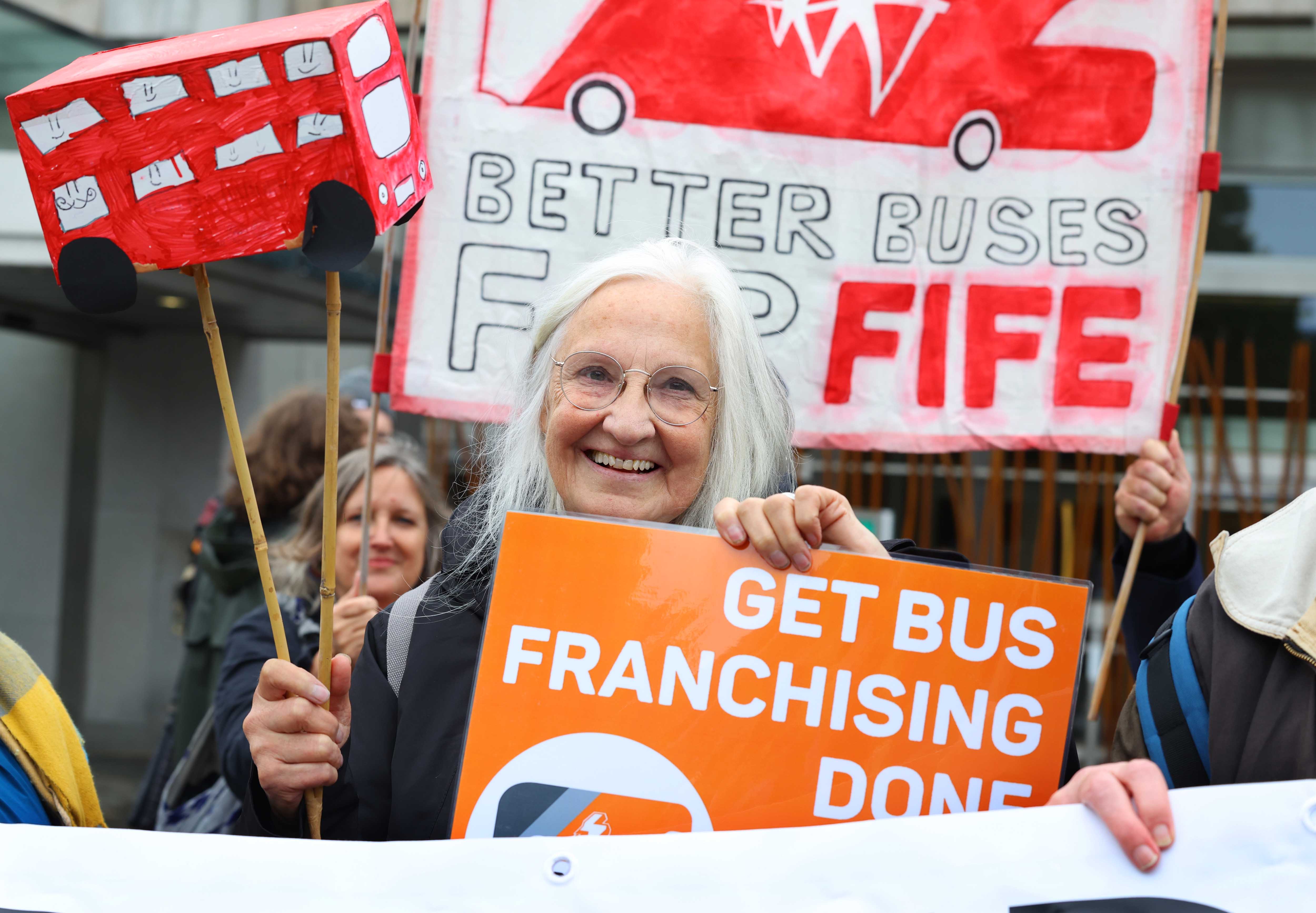
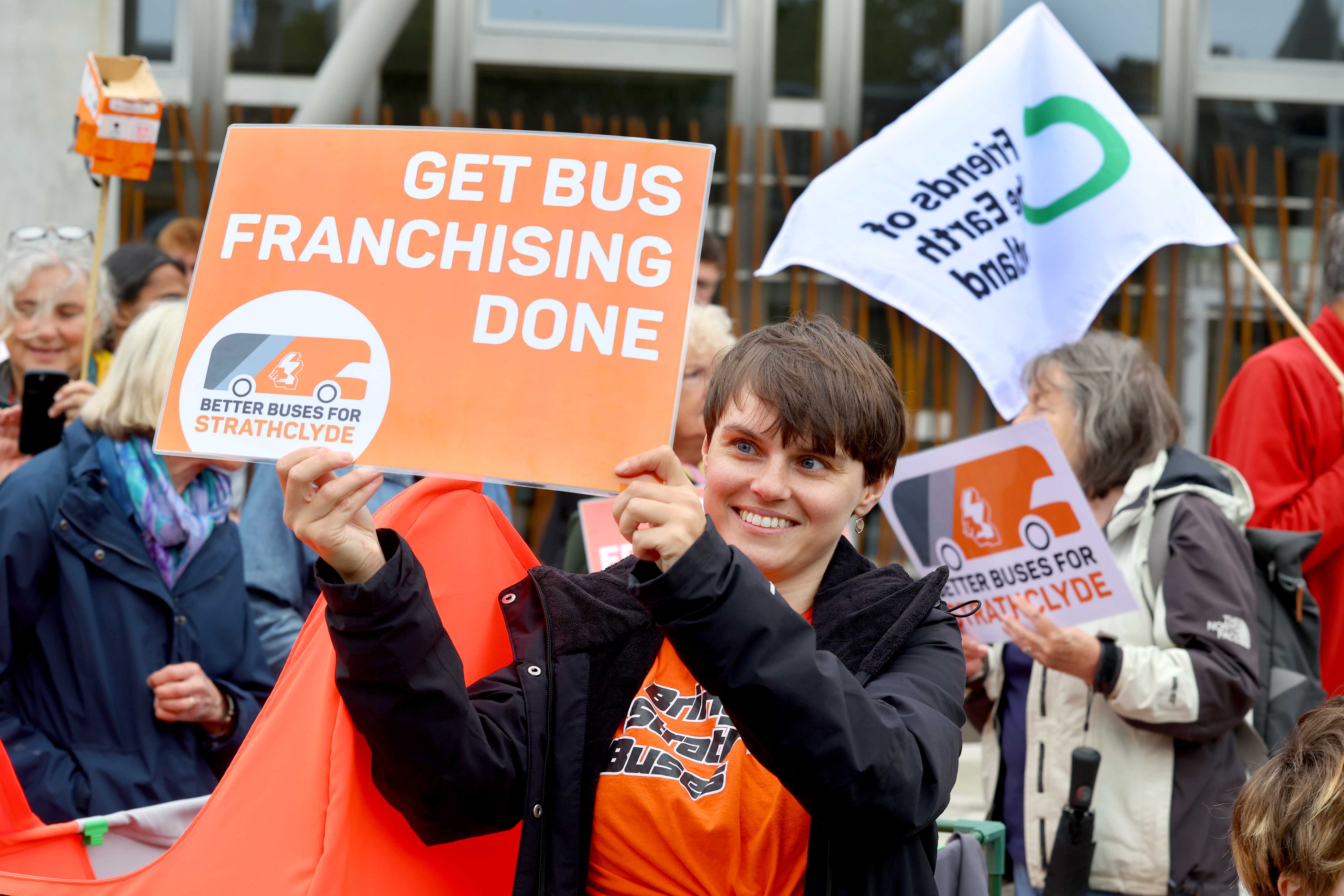
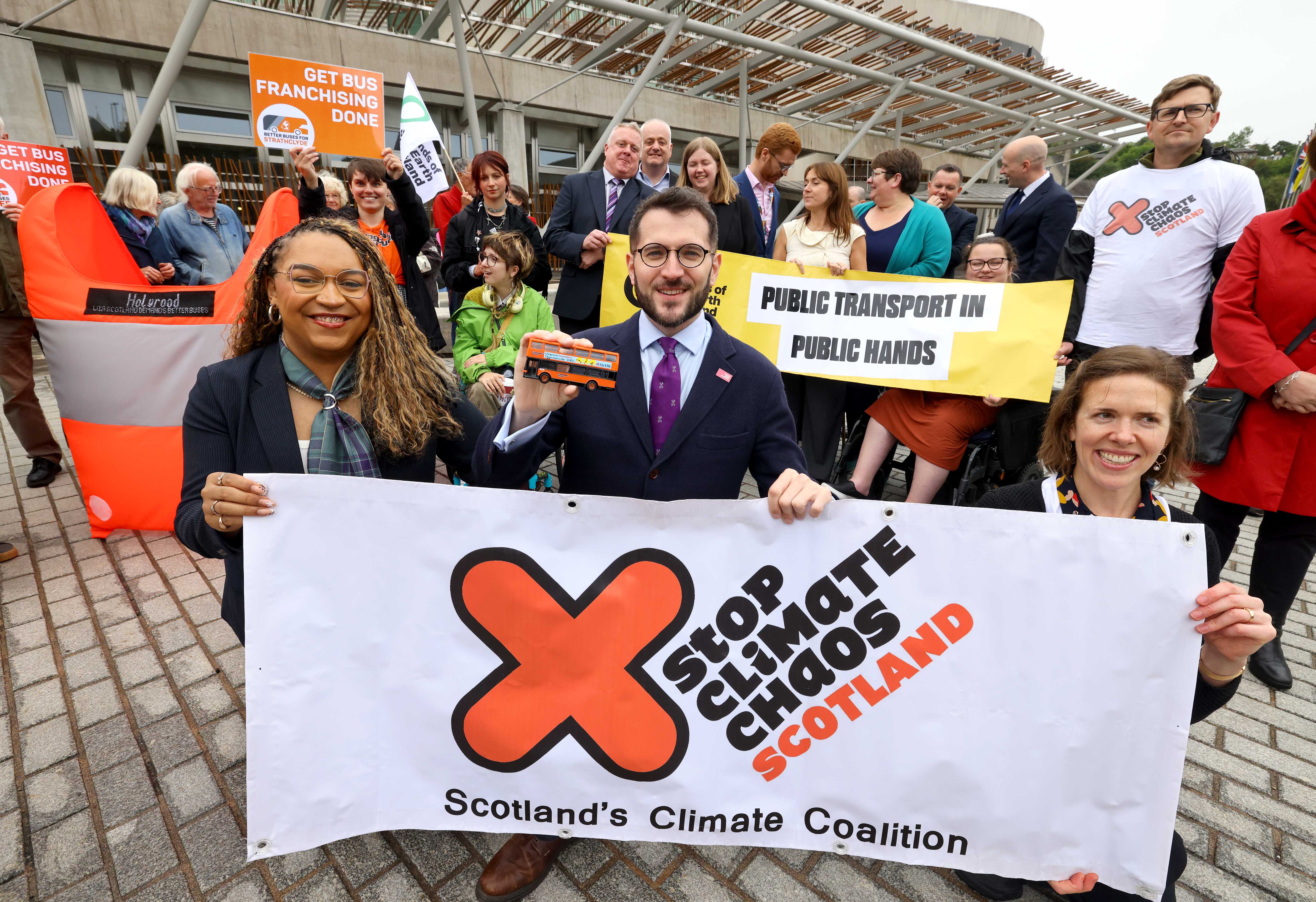
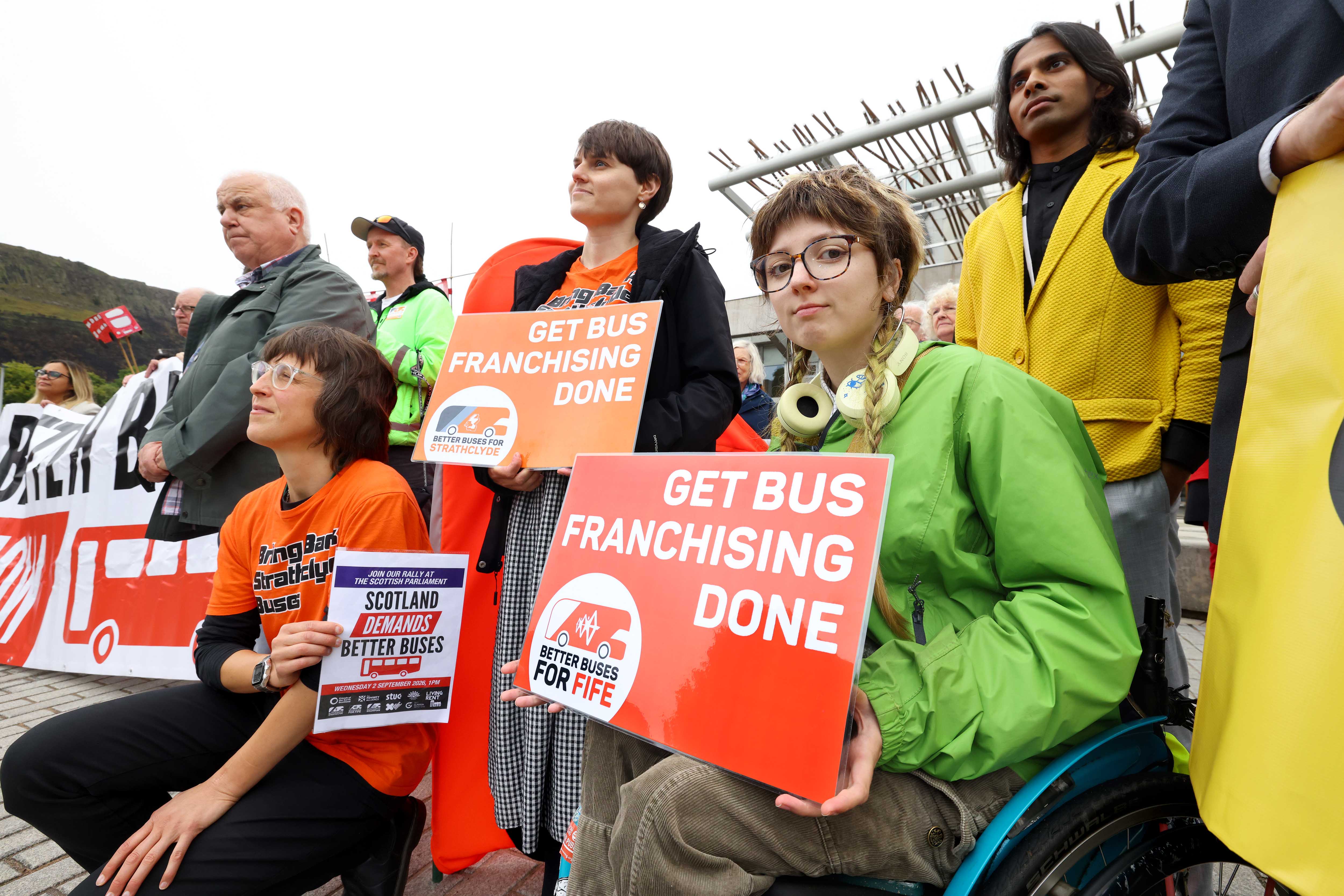
Scores of passengers travelled to Holyrood from across Scotland to take part in a rally demanding better bus services for all Scots.
The demonstrators gathered at the Scottish Parliament on 2 September to urge Scottish ministers to go ‘all the way’ with their promised reform for buses.
What do we need?
They want a Better Buses Bill brought before Parliament without delay, as well as investment for local transport authorities to bring buses back under public control, through franchising or public ownership.
The ‘Scotland Demands Better Buses’ rally came a day after First Minister John Swinney unveiled his new Programme for Government, which sets out priorities and plans for the next five years. Among his announcements was a £2 cap on bus fares for the West of Scotland, starting next Monday – extending a pilot scheme that has been in operation in the Highland and Islands since last year.
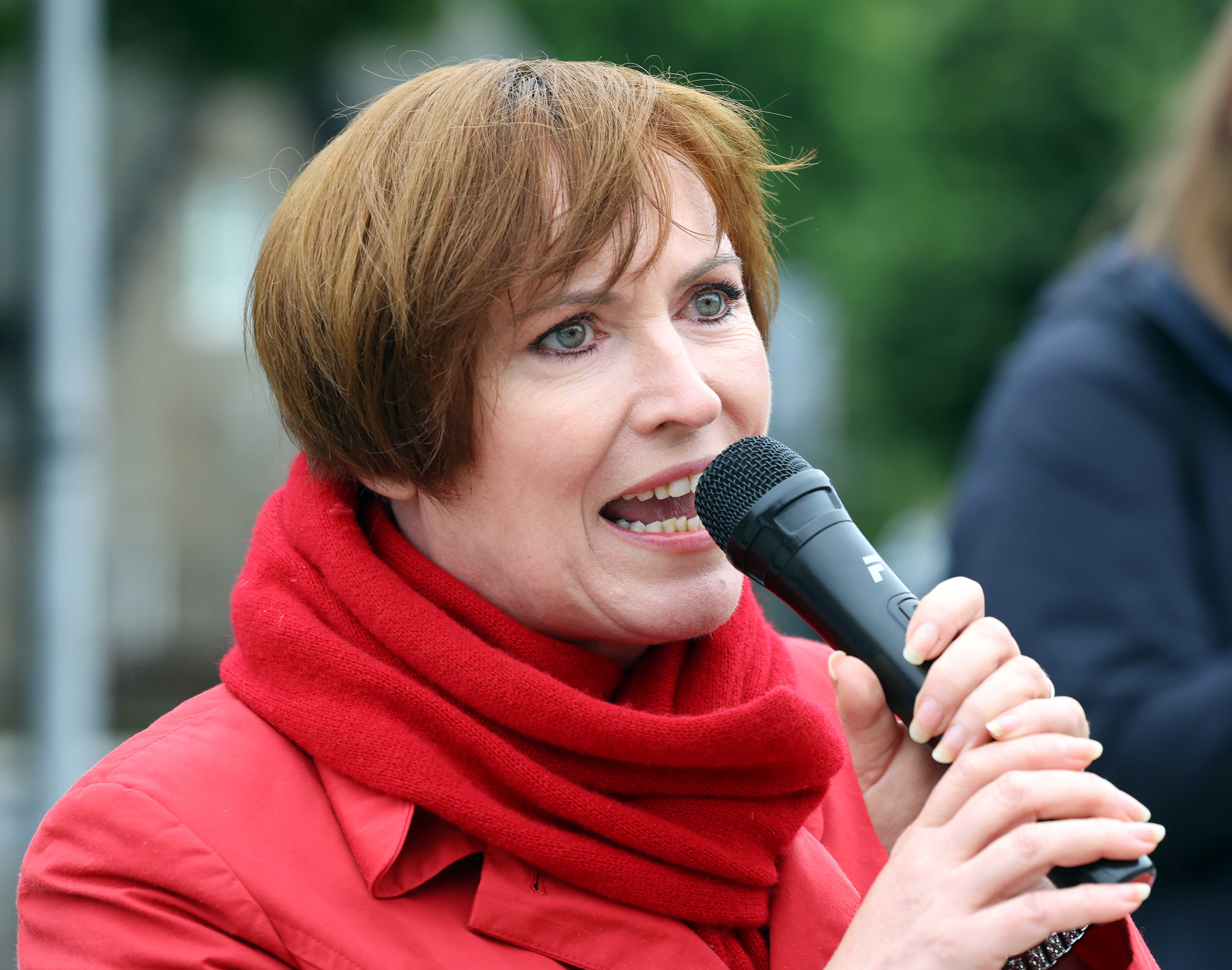
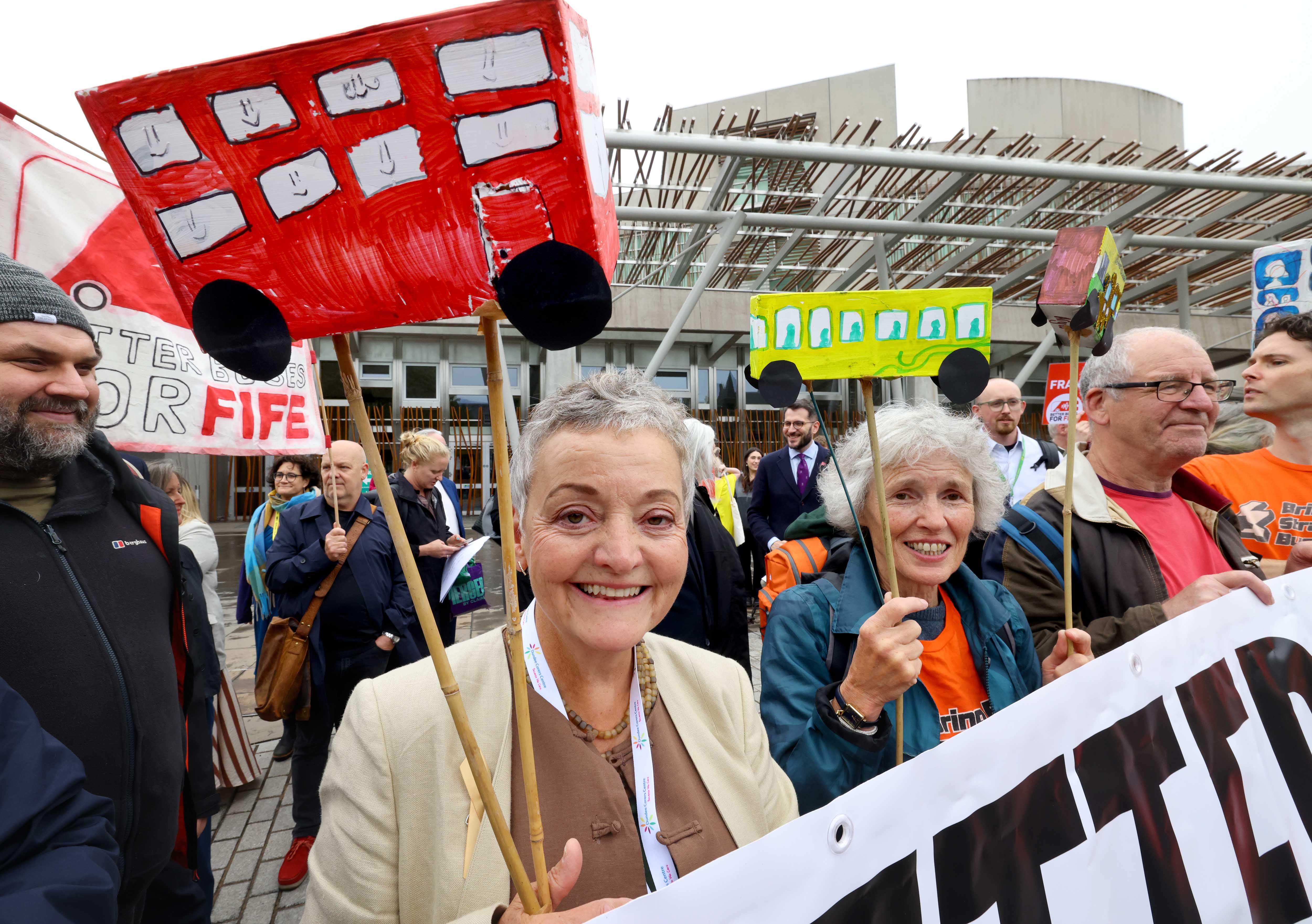
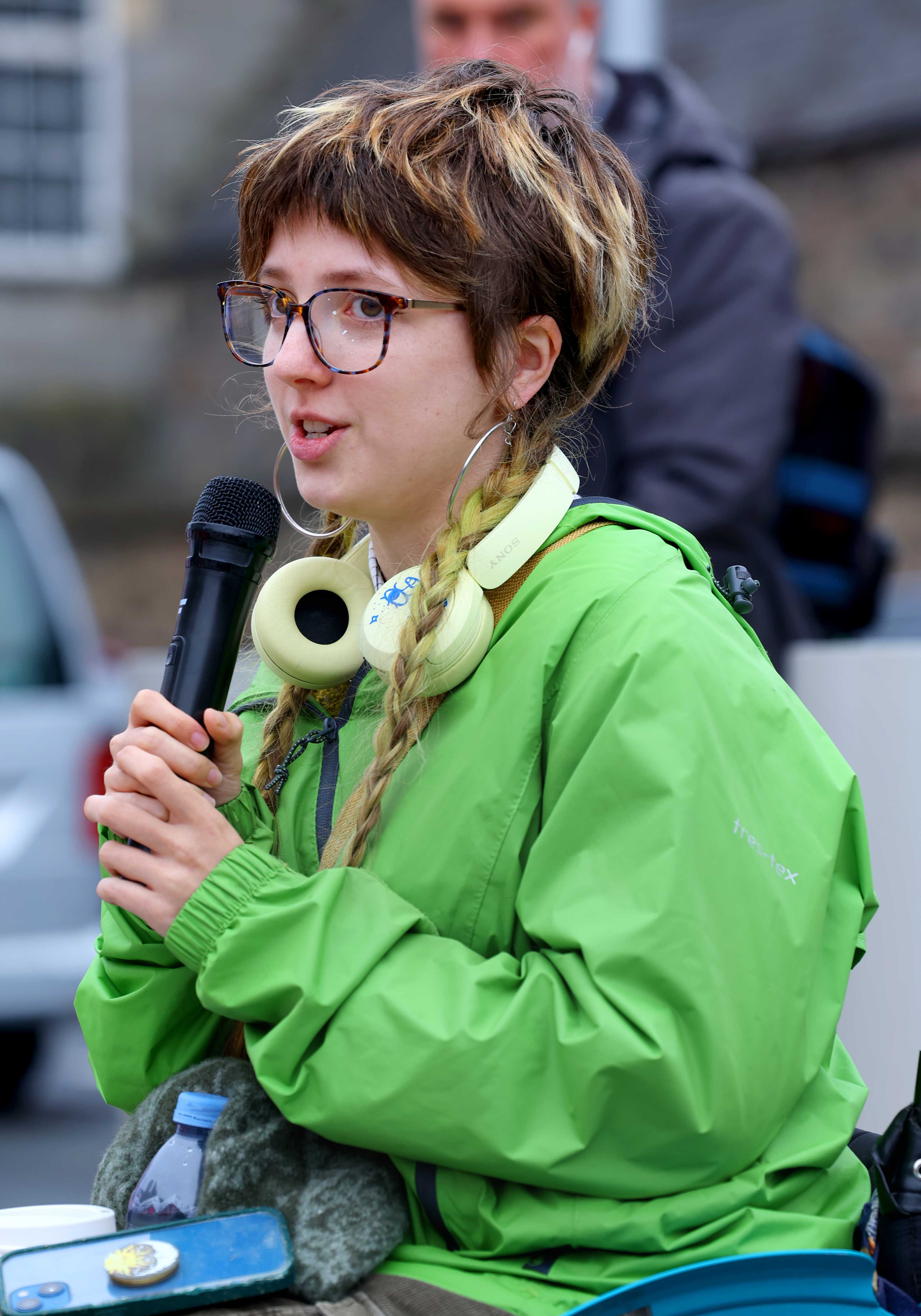
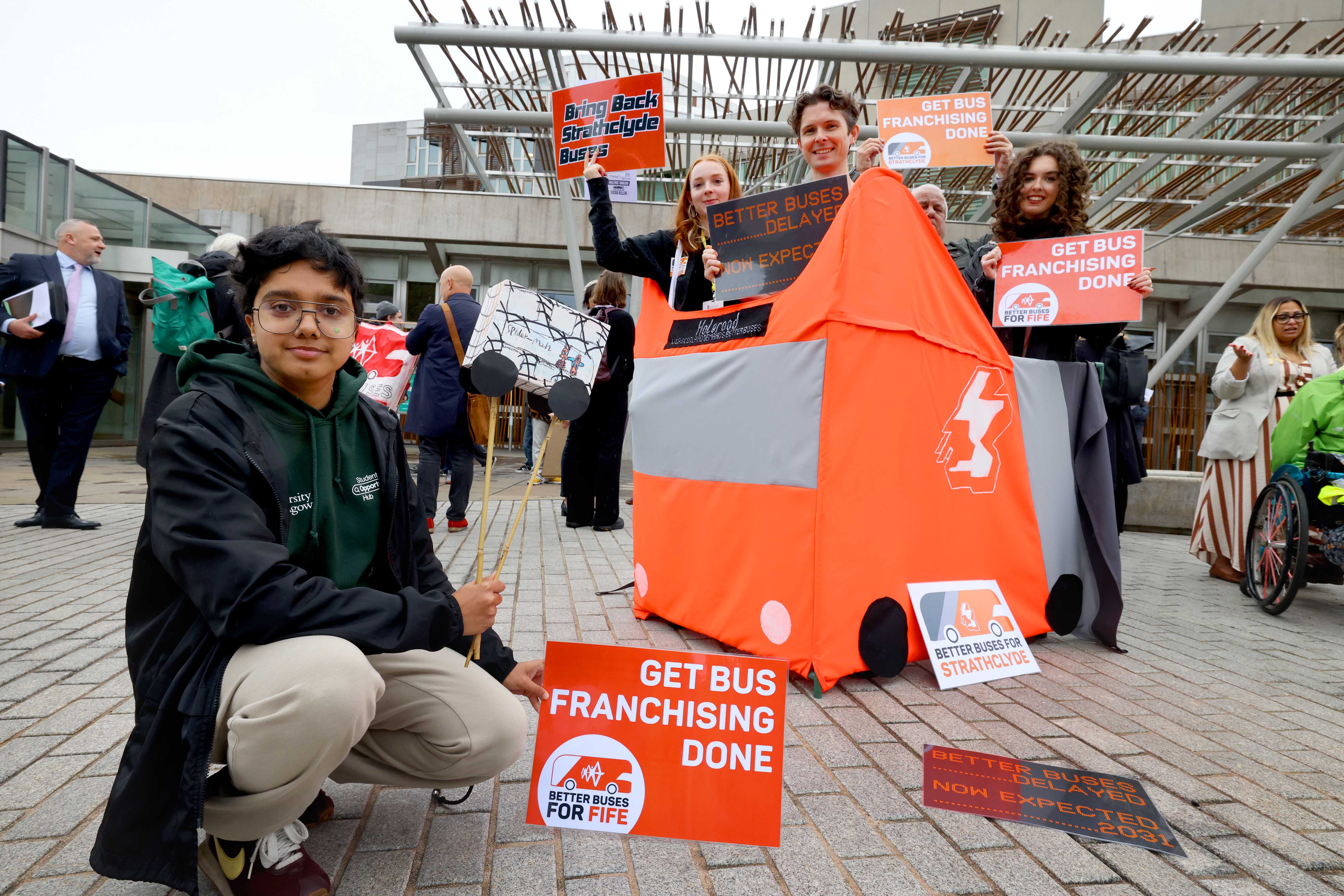
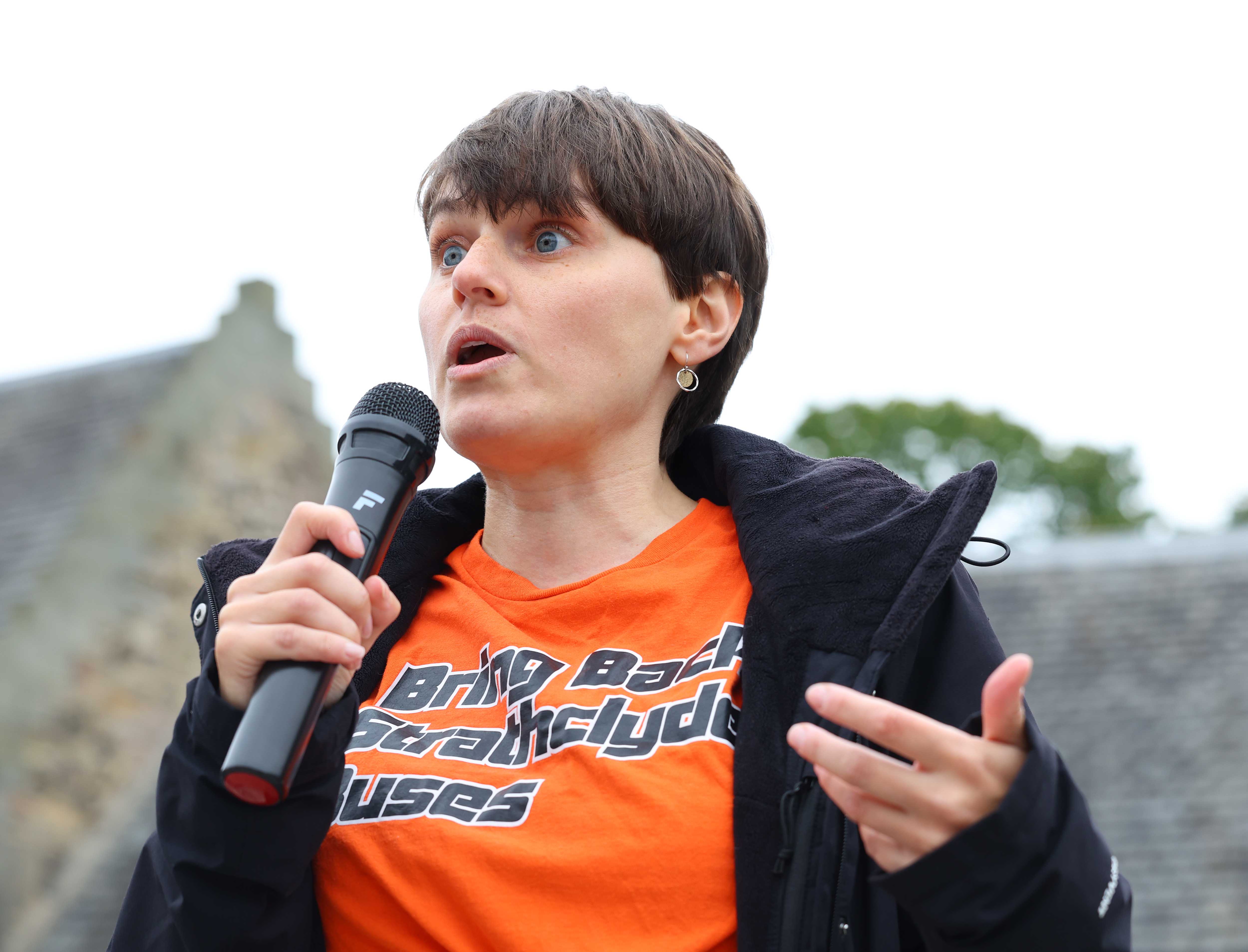
Speakers at the gathering included Roz Foyer, general secretary of the STUC, Susie Wood from Better Buses for Strathclyde, and Rae, founder of the Access2Transport campaign, highlighting issues from poor services to private ownership and the lack of provision for wheelchair users.
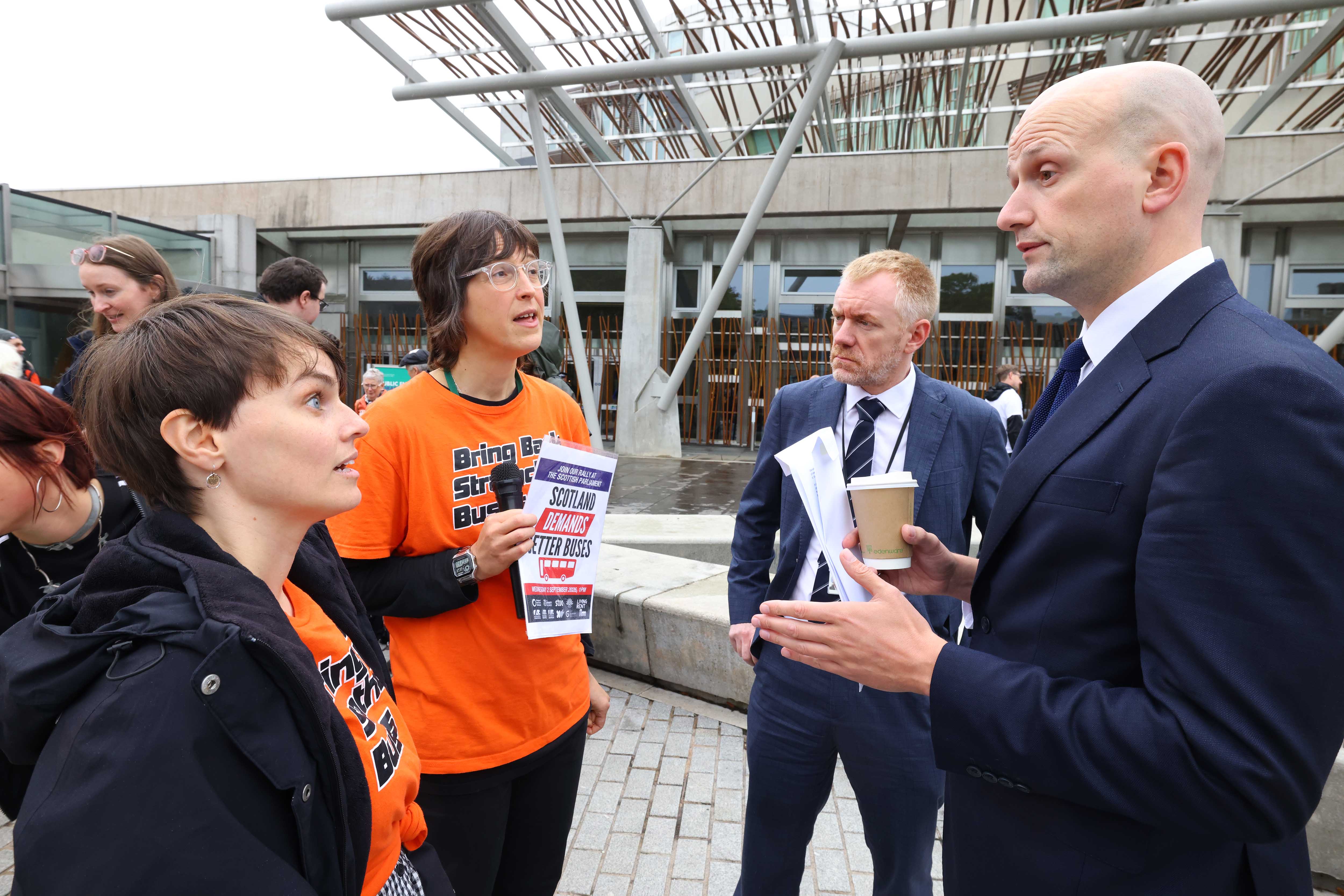
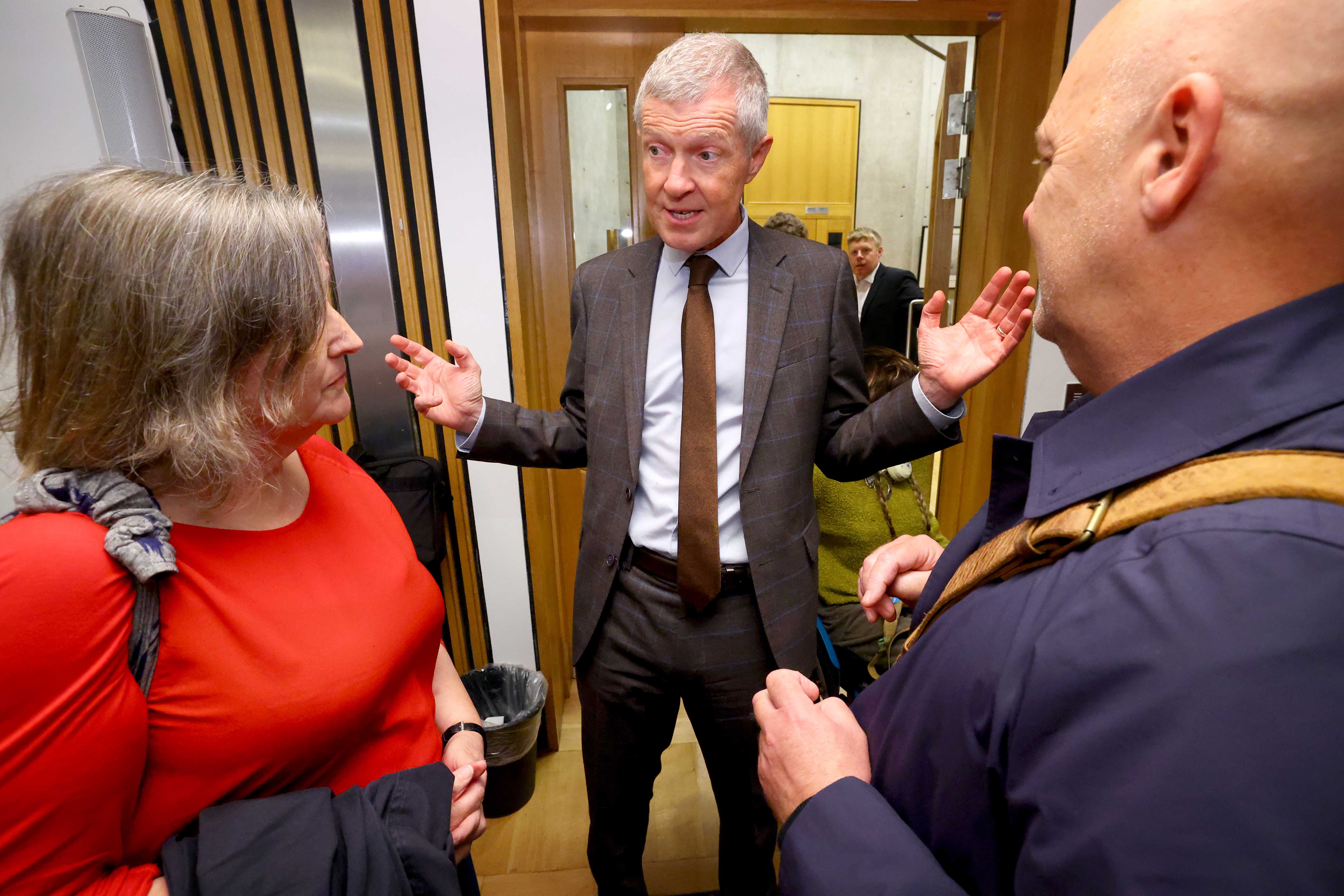
A number of MSPs from different parties, including Scottish transport secretary Stephen Flynn, joined the crowd and engaged with campaigners.
How to reach our destination
Better Buses for Strathclyde, Better Buses for Grampian, Better Buses for Fife, Friends of the Earth Scotland, the Poverty Alliance, the Scottish TUC, Scottish Pensioners’ Forum, Stop Climate Chaos Scotland and Living Rent were among those supporting the rally.
Ellie Harrison, from the Better Buses for Strathclyde campaign group, said: “In a just Scotland everyone would be able to access affordable, sustainable buses that go where they need them to, and that are joined up with other transport services.
“But right now far too many people are prevented from getting on board because they just can’t afford the fares, or because there is no bus service that meets their needs.
“Bringing buses back into public control would allow regional transport authorities to set fares, routes and timetables, improving services and affordability for passengers. The mechanism to do this is franchising, but it’s happening too slowly in Scotland.”
Fair fares
Fraser Sutherland, coalition leader for Stop Climate Chaos Scotland, welcomed the £2 fare cap, but said ministers must not stop there – they must go much further.
“We need that fare cap replicated right across the country in the next year, not in five years’ time, as the government plans,” he said.
“We also want much more public ownership of bus services in Scotland so that everyone can benefit, with profits being reinvested to make them even better and to help fund services for the public good.”
The campaigners say creating a standalone Bus Services Bill would accelerate progress, being quicker to deliver than as part of a wider Transport Bill.
This proposed bill should empower all of Scotland’s regional transport partnerships to use bus franchising powers – an option currently only available in Strathclyde, Shetland and southwest Scotland.
Transport is responsible for around 28% of Scotland’s total greenhouse gas emissions – road traffic responsible for about three quarters of that.
Tackling pollution
Emily Donnelly, of Friends of the Earth Scotland, added: “Emissions from transport remain Scotland’s biggest source of climate pollution. We can’t fix that without creating bus services that meet people’s needs across the country.
“Bus privatisation created a fragmented, fragile system where in most parts of Scotland private companies are making millions from overpriced, unreliable services.
“Stephen Flynn says he wants to put passengers at the heart of change in our bus system. Now he has the chance to prove it.”
Amanda Grimm, advocacy lead for Stop Climate Chaos Scotland, said: “People on low incomes, people of colour and disabled people are less likely than others to own a car. So it is crucial for social justice that there are good, affordable bus services in all parts of Scotland that get people where they need to be and when they need to be there.
“It’s also a no-regrets way to reduce our collective impact on the climate and local air pollution, because if it’s easier to get a bus there will be fewer cars on the road, less traffic and cleaner air for us all.”
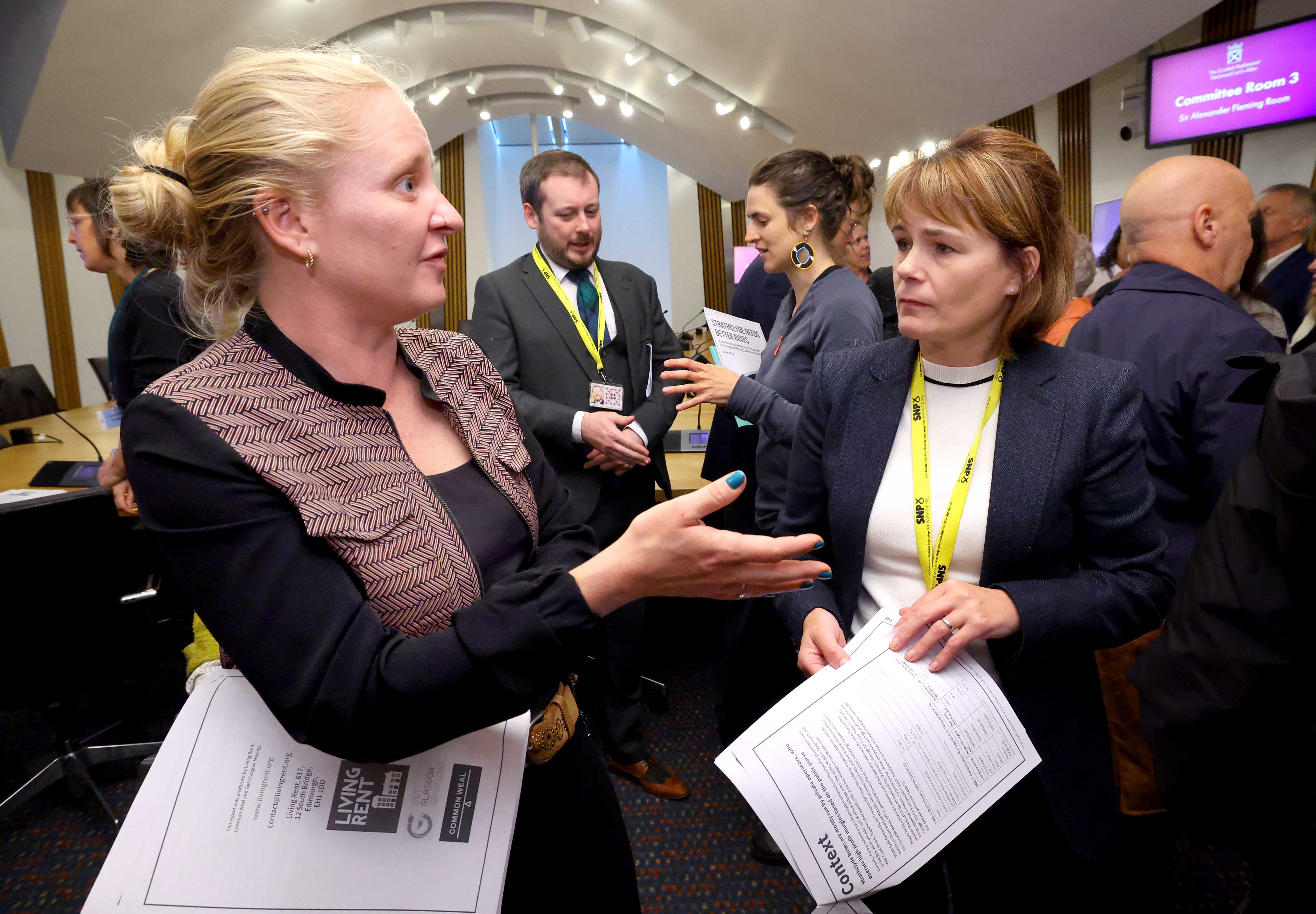
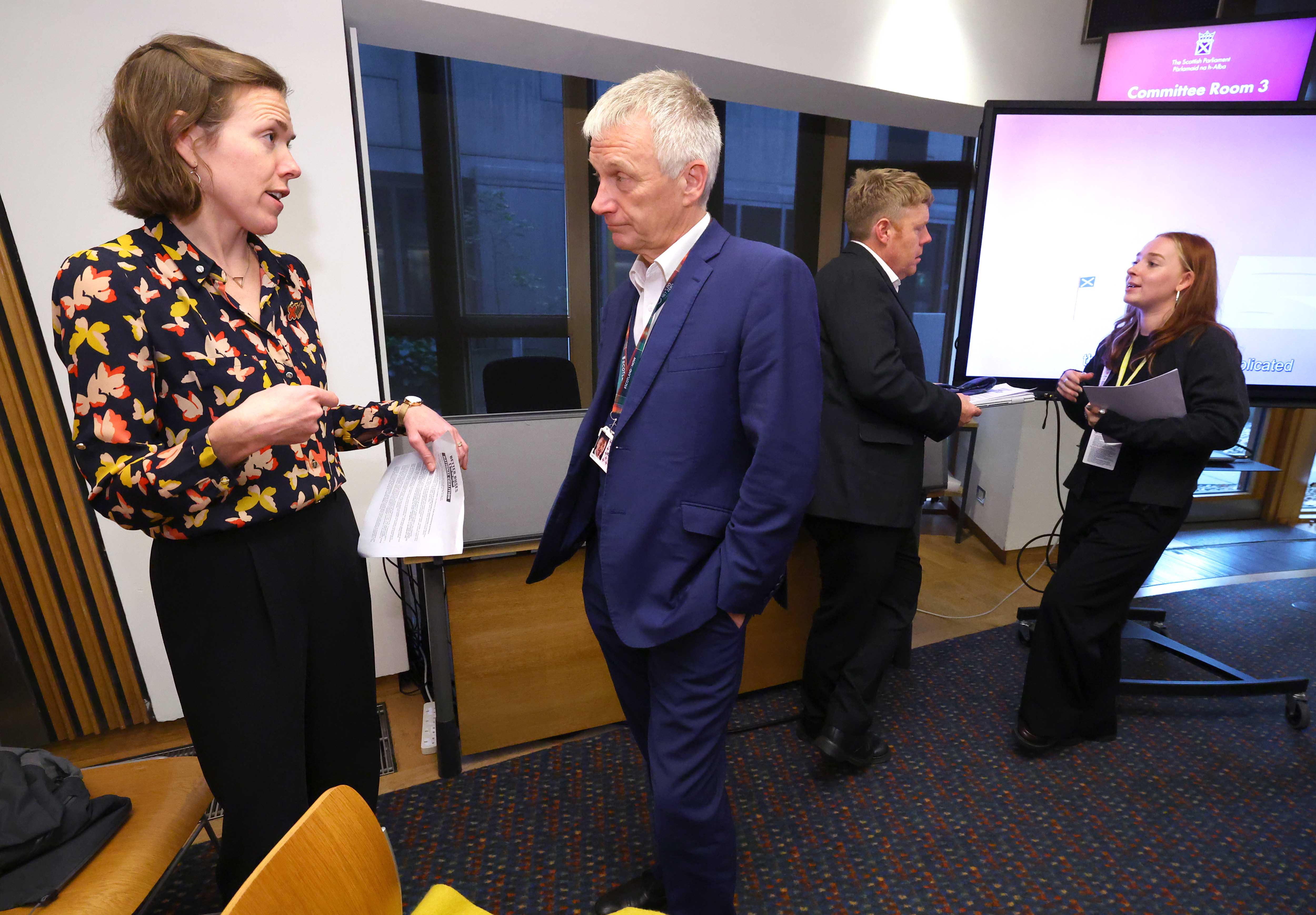
After the demonstration, campaigners spoke with the transport secretary, before hosting a drop-in session for MSPs inside the Scottish Parliament to discuss what the new law needs to deliver. ◼