
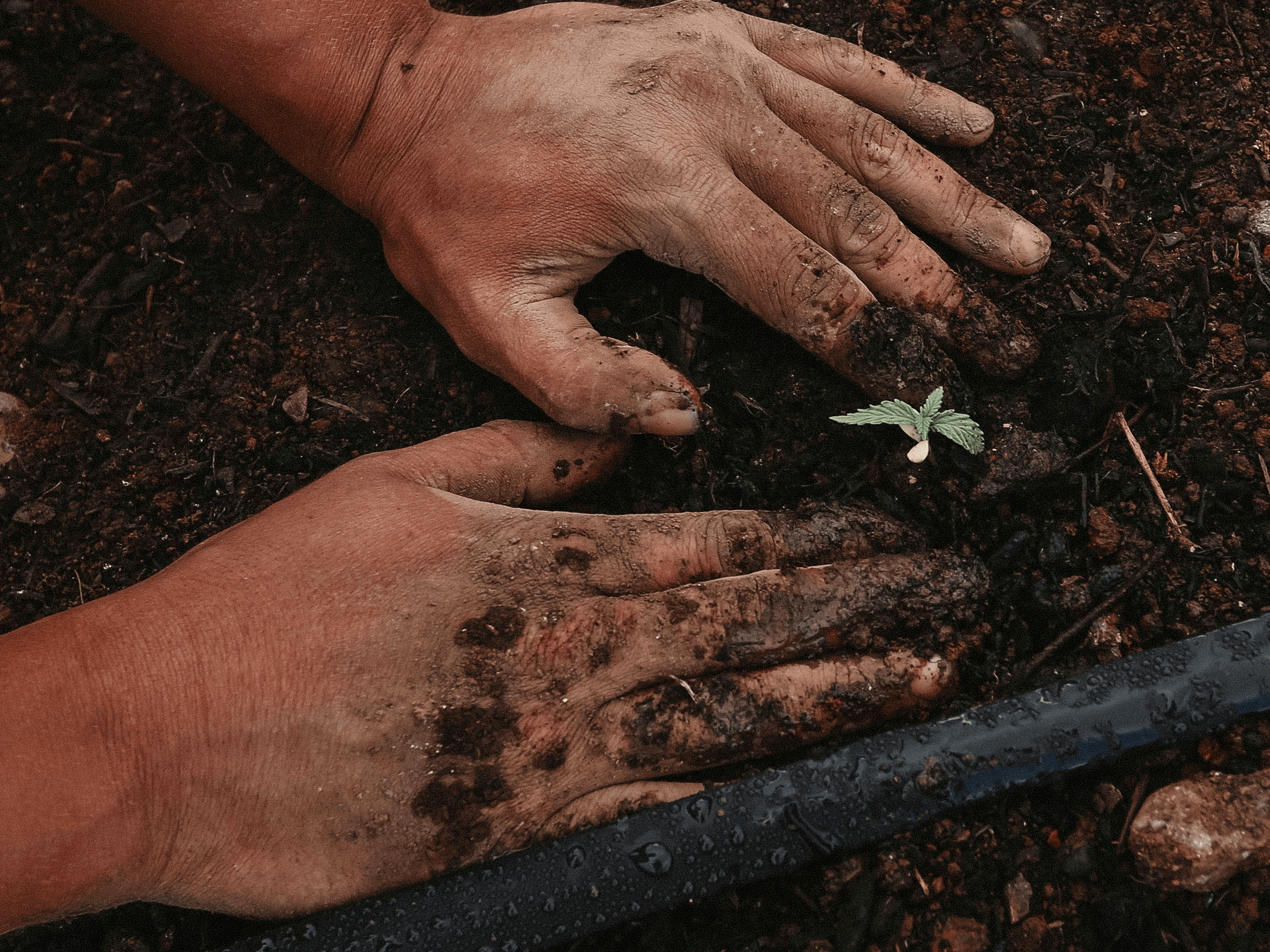
We need a joined-up approach to agriculture and climate change, writes Pete Ritchie, director of SCCS member Nourish Scotland
Farming in Scotland had a good year in 2025. Turnover was up to over £5bn (2.5% of Scotland’s GDP), driven by farmers getting higher prices for beef, potatoes and other produce. Costs were relatively stable, resulting in net income from farming of £1.5bn, the highest on record. Public support payments ‘only’ made up 40% of this income, against a long-run average of around 60%.
So even in a good year, farm subsidies are a key source of income for Scottish farmers – and, importantly, the figures above are average – some farms are highly profitable without subsidy while others struggle even with subsidy. It’s not surprising, therefore, that subsidy reform is highly contentious: if ‘who gets what for what’ is going to change then surely there will be winners and losers.
Change has been round the corner for a while. The SNP manifesto in 2021 promised that half of all funding would move from unconditional to conditional support. It hasn’t. There has been no real change in the distribution of farm payments, with 80% of subsidy still determined primarily on the basis of what land (and livestock) farmers have, rather than on what they do with their land to benefit the environment. The Rural Support Plan published in March this year proposes to maintain this budget split for the next four years. Change is still round the corner.
Why does this matter? First, it’s a poor use of public money. The Scottish Government’s own evidence paper in the run-up to the Agriculture and Rural Communities bill recognised that “most CAP funding under the 2014-20 round did not deliver the intended benefits or value for public money”. Direct payments reduced innovation and had little environmental benefit: in some cases they may have had a negative impact.
Second, it’s unfair. The bulk of the money goes to the biggest farmers, without any test of business need. Small farmers who may be struggling to make ends meet don’t get a top-up, and the smallest farms (under three hectares) are excluded altogether.
Third, it matters for climate. Direct emissions from agriculture account for 19% of Scotland’s net emissions. On top of that there are significant emissions from degraded peatland which is being used for farming.
To date, the reductions in emissions from agriculture have been the result of a fall in the numbers of cattle and sheep. That trend seems to be continuing, despite high farmgate prices. Some people argue this is a problem for food security, or claim that if we produce less here we will import more food and simply ‘offshore’ the problem. That’s simply not true for beef and lamb, where we produce more (much more in the case of lamb) than we eat. But just letting livestock numbers decline is not a plan: and it doesn’t necessarily mean that the industry becomes less damaging to the climate and nature.
So what is the Scottish Government’s plan for reducing greenhouse gas emissions from agriculture? The obvious place to look is in the new Rural Support Plan, but that just kicks the can down the road.
According to the plan, 2026-2029 offers: “A period of certainty for farmers and crofters by maintaining payments through familiar support mechanisms within the newly launched four-tier framework”; while “From 2030 onwards … we will also better prepare and make ready our industry for Scotland’s transition to a more sustainable and regenerative way of farming”.
This mañana approach makes sense in the world of the agriculture department – because fundamentally it sees food production and the environment as zero-sum. This is explicit in the way the document links spending to the outcomes in the Agriculture and Rural Communities Act. Basic payments – renamed ‘Tier 1’ – are there to deliver “high quality food production”, while measures in the other Tiers are there for nature and climate.
This lack of ambition on agriculture and climate change is reflected in the new Climate Change Plan 2026-2040. The painfully slow reductions proposed for agricultural emissions mean that other sectors have to do more work – and the plan relies heavily on carbon capture and storage technology which is still in development.
It is harder to reduce emissions from farming than from transport or heat in buildings. Most of the emissions from farming come from methane, and most of that comes from the rumens of cows and sheep. Another chunk comes from nitrous oxide, mostly from applying fertiliser. The smallest proportion is from the diesel used by tractors, combine harvesters, quad bikes and grain dryers.
But reducing emissions is not impossible. Simple measures could be more widely adopted – like ploughing less or encouraging clover rather than using fertiliser on grassland. For some farms, a planned reduction in livestock to a ‘maximum sustainable output’ makes their business more profitable through savings on bought-in feed and fertiliser. Intercropping legumes and cereals allows barley to be grown without using nitrogen fertiliser. Organic farming – which the Scottish Government is actively supporting – produces lower emissions per acre, and sometimes also per unit of product. Given the volatility of fertiliser prices, there has never been a better time to convert.
Land use matters too. Restoring peatland and reducing animal stocking levels can turn sources of emissions into sinks. Agroforestry – integrating trees with crops and targeting grazing – brings benefits for climate and nature as well as shade and shelter for livestock. Government could also make it easier to expand woodland on farms – for example by offering farmers 100-year leases and managing the woodland directly.
Feed additives which reduce methane production have had a bad time on social media but are part of the solution in the short term. In the medium term, testing and selecting cattle which naturally produce less methane has the potential to halve these emissions, using world-leading knowhow developed in Scotland.
There are huge opportunities for farmers and crofters too. We import most of the chicken and pork we eat in Scotland: can we develop new production models which are good for animal welfare, good for climate and good for nature? Home-grown hemp can substitute for soya, while more by-products from the food and drink industry can be used as animal feed, boosting the circular economy. Glasshouses using renewable energy can produce much of our imported veg and provide good all-year round jobs in rural communities.

Kicking the can down the road isn’t just bad for climate and nature. It’s a strategic mistake for the farming industry in Scotland. That’s because it’s muffling the market signals, telling ourselves comforting stories about Scottish farming being the best in the world, allowing businesses to avoid innovation.
The customers for our produce are not satisfied with pictures of beautiful landscapes and happy cows. Those customers – Aldi, Co-op, Lidl GB, M&S, Sainsbury’s, Tesco, and Waitrose – have signed up with WWF to a commitment to halve the environmental impact of UK shopping baskets by 2030. They are committed to serious measurement by their suppliers.
There are many Scottish farms which can demonstrate that they are producing ‘state of the art’ low-carbon food, and they are less dependent than others on subsidy. But there are many farms which are not doing enough for climate and nature – or have no data to show how they are performing. A mental model and a funding system which put ‘food production’ in one box and ‘climate and nature’ in a different box are doing a disservice to many of our farms and crofts.
It is no accident that Denmark and the Netherlands – two of the most successful agricultural producers in Europe – have taken some of the boldest measures to reduce emissions from farming. They are looking ahead, planning for changing social expectations, changing diets – and a recognition that agriculture and land use have to be part of the solution for climate and nature, not just part of the problem.
Scotland still has a chance to be bold, but the signs so far in this parliament are not great. The new Rural Affairs Committee can talk about all matters rural, except climate, while the new Climate Action Committee can discuss all matters climate, except rural.
Now, more than ever, with the impact of climate change on our farms and crofts impossible to ignore, we need joined-up policy on farming and climate. ⏹