Photo by Eric Veiga on Unsplash
By Amanda Grimm, Advocacy Lead for Stop Climate Chaos Scotland
One of the first stops on Andy Burnham’s journey as UK Prime Minister has been to announce a £2 cap on bus fares across England, to help ease the cost of living. The move highlights the importance of public transport in people’s everyday lives.
The new PM’s announcement created headlines, but Scotland has been trialling a similar scheme since early last year – albeit on a smaller scale, for the moment.
Communities in the Highlands and Islands have been testing it out, with travellers paying a maximum of £2 for a single journey. The pilot project is the first step in the Scottish Government’s plan for a nationwide rollout of the price cap over the next five years, with Strathclyde set to benefit next.
The aims are to make bus travel more affordable, particularly for lower‑income households; easier to use, with clear, simple pricing; more appealing; and more resilient, supporting local bus services.
It’s also intended to get traffic off the roads in the battle against climate change. Transport is one of the biggest sources of greenhouse gas emissions in Scotland – around a third of the total.
Ticket to ride
Access to affordable, reliable and efficient travel can make a huge difference when it comes to accessing work, healthcare and leisure activities, particularly for those on the lowest incomes or living in the most remote areas.
Buses are already used daily by a huge swathe of the Scottish population. Making bus travel more affordable and attractive allows more people to leave cars at home while improving public services for those who already depend on the bus.
Getting more people on buses will reduce emissions and improve ordinary people’s daily lives at the same time.
So far, so good but there’s a long way to go
Around 450 million public transport journeys are made every year in Scotland, by road, rail, air and sea. Buses are by far the most commonly used mode, accounting for nearly three quarters of all public transport journeys. Trains are next with almost a fifth of journeys, followed by one in 20 on planes and one in 50 by ferry.
The Scottish Government’s bus fare price cap is the latest initiative designed to lower the cost of travel for Scots. It comes following successful concessionary schemes for elderly and young people, with free bus travel for over-60s for the past 20 years and under-22s since 2022. Peak rail fares were scrapped in September last year. There are also local concessionary schemes for ferry travel.
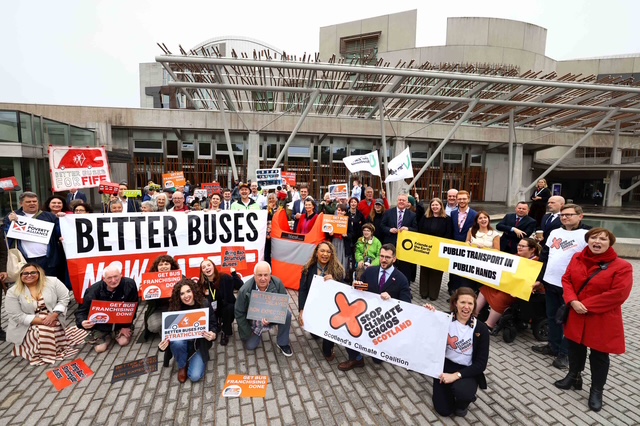
But Stop Climate Chaos Scotland knows that Scotland can go much further to improve buses – all the way – and we need to go faster. The coalition is calling for a Scotland-wide £2 fare cap by the end of the first year of the current Parliament; greater public control of services, with more routes and better operations; minimum service guarantees for routes in rural areas; free bus travel for all by 2031; and eventually full public or community ownership of bus services.
New direction
Currently, most bus services in Scotland are privatised. Under this system, the Scottish Government pays large subsidies to operators to cover the cost of concessions. Transport Scotland is reimbursing private firms up to 98% of full fares, according to an FOI by Better Buses Strathclyde.
Although the proposed £2 fare cap will help passengers, it will also perpetuate the transfer of public money to private companies that often make large profits from inadequate services. The only long-term solution to reduce fares without state subsidy is public ownership of bus services.
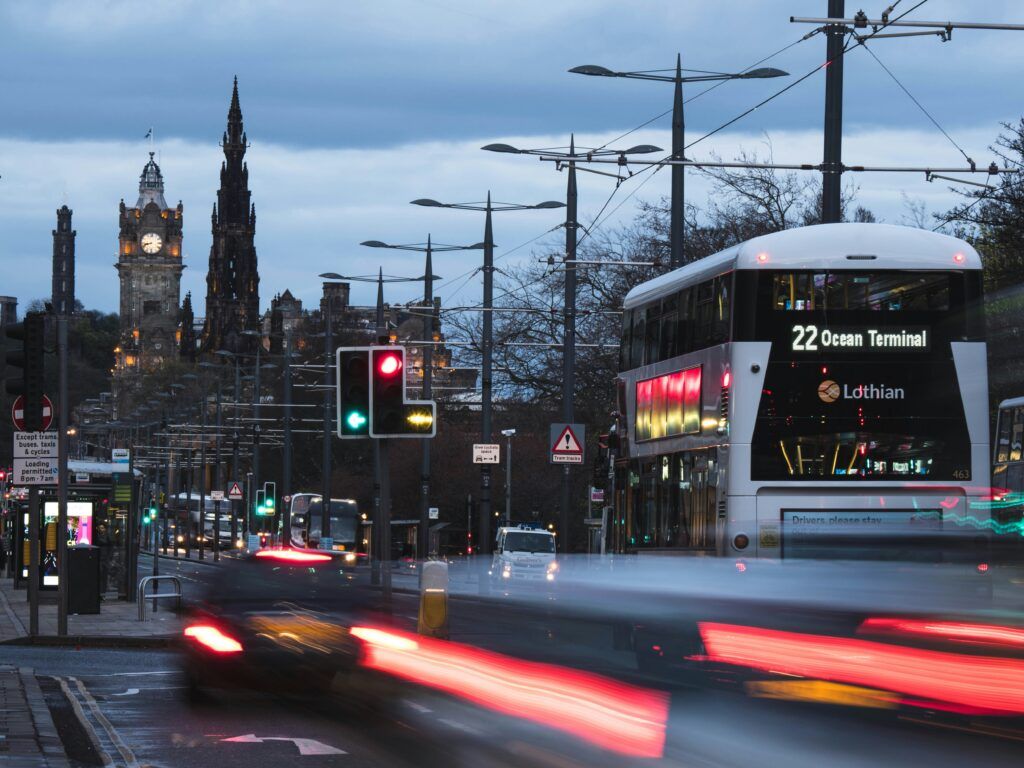
Council-owned Lothian Buses, which has won awards for its services, is a notable exception and good example of how public ownership can deliver a more reliable network and less expensive fares than private companies.
Fare’s fair
Burnham has announced that a share of the UK’s £454 million funding pot for capping bus fares will come to Scotland. This should enable the Scottish Government to speed up the rollout of the fare cap north of the border.
But there is another source of income that could also be utilised – a levy on polluting private air travel. Only 0.0008% of the global population own private jets, but taxing their flights to and from Scotland could bring in around £30 million each year, to help tackle climate change and improve life for ordinary people. SCCS is calling for a private jet tax to be introduced by 2028, set at a meaningfully high rate – at least 10 times the existing higher rate of Air Departure Tax.
Ultimate destination
Scotland should make bus travel free, fast and accessible and bring services into public or community ownership, alongside efforts to increase active travel and reduce car use. Community-owned sustainable transport options should also be expanded and funded across the country. ⏹