
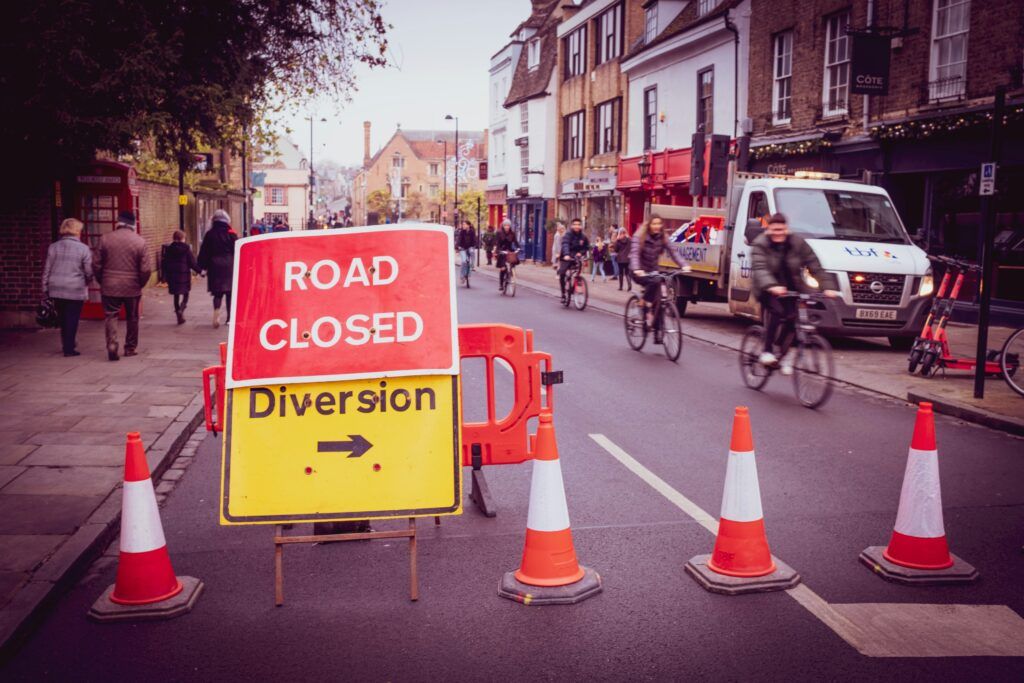
Photo by Ben Wicks on Unsplash
By Amanda Grimm, advocacy lead for Stop Climate Chaos Scotland
The Scottish Government’s Climate Plan acknowledges that “policies to reduce car use” are important ‘drivers’ (no pun intended) in the effort to reduce transport emissions.
Transport Secretary Stephen Flynn’s remit includes “reduction on car miles”. So why has he just taken a key policy tool to disincentivise car use off the table?
The Climate Change Plan’s number one policy on transport is the Zero Emissions Vehicle Mandate (ZEV Mandate), which sets targets for the percentage of new cars and vans that must be zero emissions each year until the 2035 deadline for all new vehicles to be electric. But this is controlled by the UK Government, which is now consulting on watering down these targets. That could add 8.4 megatonnes of emissions and cut economy-wide savings by 6%.

We at Stop Climate Chaos Scotland, with more than 70 members across the country, oppose the move – and so does Scotland’s Cabinet Secretary for Climate Action, Gillian Martin, who has said: “We do not want any rolling back of ambition in that area.”
But the Scottish Government itself is rolling back ambition on the Climate Change Plan’s second lever on transport: “policies to reduce car use”. These policies include free bus travel, investment in public and active transport, and ‘local schemes’ (perhaps locally-owned buses or local congestion charging?). These are areas where the Scottish Government and local authorities have the power to act, but progress has been too slow.
The Scottish Government has committed to cap the cost of bus travel at £2 across Scotland by the end of this parliament, which should encourage more people to leave cars at home and opt for the bus instead – where good services exist. But 2031 is too late. By then we will have passed the crunch point for keeping emissions from rising more than 1.5C above the ‘safe operating limit for humanity’.
The pace of policy change clearly does not match the urgency of physical reality. If Scottish ministers were serious about tackling the climate emergency and improving life for Scots, they would be investing all they can in improving public transport, extending it across rural areas and making bus travel free as soon as possible. They would also be investing more in safe cycling infrastructure and other active travel, not cutting the budget of the People & Place schemes – as happened last year.
They would also allow and encourage councils to implement local road-user charging schemes, where appropriate, to help disincentivise private car use where public transport options are available. As well as cutting emissions, this would reduce congestion and journey times, improve air quality and health, and make roads safer – all of which is recognised in the national Climate Plan. It would also save public money: a 15% reduction in congestion and crashes would save society around £240m a year.
Congestion charging would also allow local authorities to raise much-needed revenue to invest in more and better public transport and active travel. As recently as June 2025, ministers pledged to give councils the power to implement these charges. Edinburgh and Glasgow councils were both exploring this option, but were waiting for the Scottish Government to fulfil its pledge and empower councils to use this tool should they deem it appropriate. But Transport Secretary Stephen Flynn told parliament last week that progress has been halted, and “no further work is being taken forward”.
The SNP leader of Glasgow City Council hit back, saying this unilateral decision breached the agreement between the Scottish Government and councils to collaborate on policymaking, and Edinburgh councillor Chas Booth called it a “massively damaging U-turn” that will “make it impossible for councils to meet their own car-reduction targets” and “prevent councils from raising millions of pounds for investment in sustainable travel”. This flies in the face of the Scottish Government’s proposals to extend councils’ responsibilities and strengthen local democracy.
Ministers may fear road-user charging is a vote-loser. Polling says otherwise. An Ipsos Mori survey found that 64% of people would support road-user charging if all the revenue was used to improve public transport. To minimise any public concern, any road-user charging should be introduced as part of a clear strategy to reduce congestion and improve public and active transport.
The impact of new charges on those who drive vans for work, and those on the lowest incomes, including unpaid carers and disabled people, must be considered and mitigated. But we should remember that those on the lowest incomes are less likely than others to own or drive a car. If bus travel was free for all, this would do more to reduce the cost of living for those most in need than by maintaining the status quo. And if public and active transport could be made faster, safer, more accessible and more extensive across Scotland then road-user charging could be the additional push needed to encourage more people out of their cars and into a greener, healthier, less stressful mode of transport.
As we tackle climate change as a society, we should aim to do more than just replace petrol with electricity; more than just cut emissions. We have the opportunity to create a fairer, healthier society with a better quality of life. We have the opportunity to focus on prevention: prevention of poor health, prevention of road accidents, prevention of climate breakdown. But by halting progress on local road-user charging, the Scottish Government is upholding the dominance of the private car at the expense of other travellers, of children’s safety, of everyone’s health, of local councils’ powers, and of the safe climate on which we all depend. ◼
A version of this article first appeared in The National