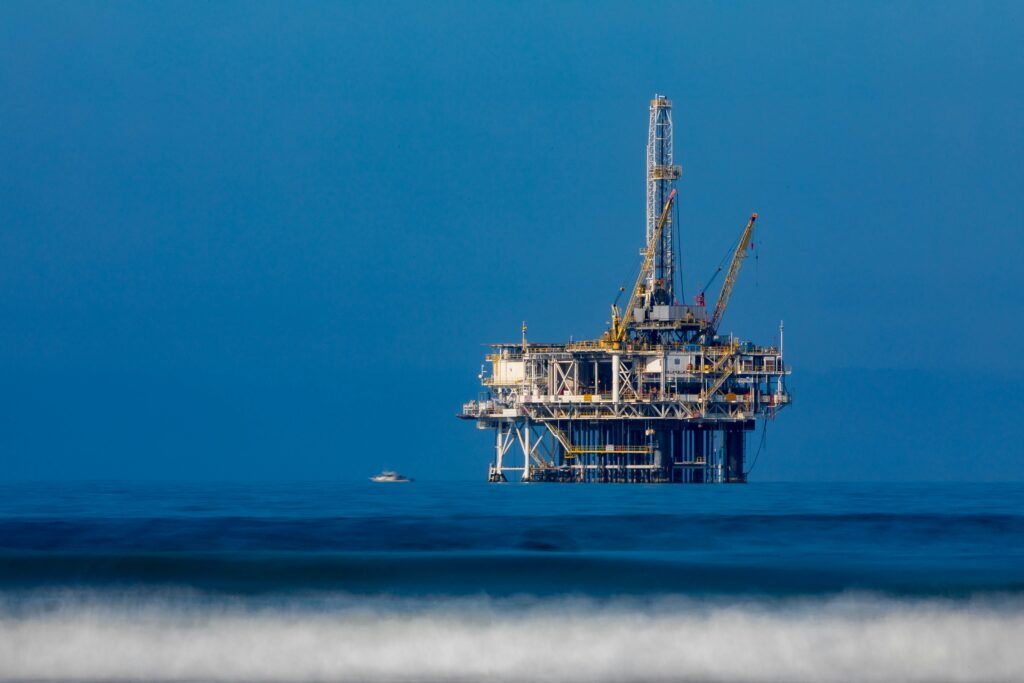
Photo by Arvind Vallabh on Unsplash
By Ben Wilson, director of public engagement for SCIAF and international policy lead for SCCS
Whilst the election debates on fossil fuels rumbled on in Scotland ahead of the recent election, a landmark conference was taking place in Colombia. The talks which took place there might have just started a new era for global climate cooperation. And our new government must take heed.
The weight of the future is hanging heavy on the shoulders of the stuttering fossil fuel era. It is imperative that the world must get on track to bring about a decisive and fair move away from oil and gas, and here at home this change must accelerate.
At the end of April, in the Colombian port city of Santa Marta, the governments of Colombia and Netherlands convened a major international gathering to accelerate a just transition away from fossil fuels. Representatives from around 60 governments, civil society, faith communities and businesses came together with a shared purpose: to take heed of the reality that no there can be no expansion of oil, gas and coal if climate change is to be defeated, and to put forward an ambitious proposal for a global pathway for the just transition to low-carbon alternatives.
The government of Colombia was the first fossil fuel producing nation to endorse calls for a fossil fuel non-proliferation treaty (FFNPT) in 2024. The country is now one of 18 that have formally joined this movement for a new mechanism to halt the planet’s addiction to hydrocarbons. Alongside them, 194 sub-national governments, thousands of civil society organisations and faith leaders (including the Scottish Catholic Bishops Conference) have all formally endorsed the calls for a new treaty, and momentum in building.
The origins of the calls for a FFNPT are with a global climate process which has, despite 30 meetings of the COP, failed to set out any tangible plans for the global just transition. Born out of frustration with the stagnating and slow UNFCCC negotiations at the COP each year, the movement for the FFNPT has seen rapid growth in recent years. In just the past two COPs, failure to build on the landmark decision at COP28 in Dubai in 2023 – for all countries to “transition away from fossil fuels” – has spurred momentum. Organisers of the April conference are hoping it will bring about a new era of climate cooperation that can spur the worldwide action scientists say is needed to avoid climate breakdown.
Elephant in the room at international climate talks
The history of fossil fuel negotiations at the COP can be regrettably brief. In a nutshell: the first mention of fossil fuels in any COP decision text came at COP26 in Glasgow in 2021, and even then it was only to “phase down unabated coal”.
Since the first meeting of the COP in the 1990s, many Global South countries have fought hard that any restrictions on fossil fuels must be accompanied by the “right to development”. Many of the biggest fossil fuel producing countries (and historical vandals of climate negotiations) have long put forward the spurious argument that “emissions are the problem, not fossil fuels”. Yet, despite this, at COP28 in Dubai the UAE presidency managed tense negotiations for two weeks to build global consensus on the agreement that the time is now to “transition away from fossil fuels”.
However, failure at COP29 and COP30 to agree what exactly this means in practice has seen the FFPNT movement gather pace and brought about the recent conference in Colombia. This ‘coalition of the willing’ approach has laid out a challenge to COP31 – to be held in Türkiye this November – that will be hard to avoid. Hope remains that this process will sit parallel to the COP process, pushing it from the inside and out and aiming to drive up political attention on the crucial issue of the just transition.
So what does this mean for Scotland?
Oil and gas, both production and use of, remains a divisive issue in Scotland and the rest of the UK. The transition ahead is not just technical; it is deeply political. It requires standing up to powerful vested interests that benefit from delay and denial and choosing instead to invest in a different kind of prosperity – one rooted in sustainability, resilience and justice.
But getting there will require courage from leaders at home and across the world.
None of this is fringe thinking. The science is unequivocal. The economics are shifting fast. And many in the business community now recognise that long-term opportunities lie in the green economy, not in doubling down on declining industries.
The costs of inaction are also becoming clearer by the year. Climate-related disasters are already inflicting enormous economic damage globally, with adaptation and recovery bills running into hundreds of billions annually. Those costs will only rise. Acting now is not just morally right; it is fiscally responsible.
Scotland is a country that has prided itself on climate leadership for decades. From its ambitious climate legislation, proliferation of renewables, hosting of COP26 and becoming the first country in the world to explicitly pledge finance for loss and damage, Scotland has a global reputation for concern for the climate emergency. This reputation is at risk if the Scottish Government’s position on new oil and gas falters. This would be a red line crossed not just symbolically, but materially too.
It would send a signal that, when the pressure mounts, even self-declared leaders are willing to retreat. That short-term political calculation outweighs long-term responsibility. That we are prepared to ignore both the science and the direction of travel of the global economy. It would also be, quite simply, bad policy. Bad for people, bad for the planet and bad for business. The future lies in industries that are growing, not those that are winding down.
There is, of course, a reason why fossil fuels continue to attract political backing, particularly from the right. It is where the money and the power has historically been. And those who benefit from that status quo are investing heavily to maintain it. But that is precisely why leadership matters: to look beyond where power sits today, and to shape where it needs to go tomorrow.

At SCIAF, we do not approach this as an abstract debate. We see the consequences of climate change every day. We work with families who have lost crops to drought, homes to floods and livelihoods to a climate that no longer behaves as it once did. We support mothers dealing with the trauma of losing children to malnutrition. We help communities rebuild after everything they own has been swept away.
We know that people can recover – with enough support. We can help communities adapt and build resilience. But response alone is not enough. Prevention is better than cure, and that means tackling the root cause of the crisis.
The Santa Marta Conference has started something exciting internationally, and it could be remembered as a major turning point in the planet’s fight against climate change. Next year, Ireland and Tuvalu will host the second conference, picking up the baton from Colombia and the Netherlands, seeking to drive further the momentum for the global just transition.
Spaces like this are exactly where Scotland should be – under any constitutional arrangement – and can yet be a leader in. Attending the next conference with a strong commitment to continue opposition to new oil and gas in the North Sea would help the Scottish Government stand on the right side of history. Deviation from that position, however, might see the door slammed shut in our faces – which would be bad for Scotland, bad for the planet and bad for future generations. ⏹